Breaking Barriers: Leadership Programmes and Economic Empowerment of Women in Market Trading
CWCS initiated the journey of “Breaking Barriers: Leadership Programs and Economic Empowerment of Women in Market Trading” in Karwan Bazar, Dhaka city. It is a one year project started in May 2025 which aims to address the systemic barriers that have historically hindered women's leadership potential, providing a structured environment where young women can learn, grow, and thrive. By fostering a culture of empowerment and resilience, this initiative seeks to create a new generation of women leaders who are not only capable but also committed to driving social change. The main objectives are to provide leadership training to women traders and at the same time provide them with necessary materials and equipment so that they can enhance their existing market trading and acquire better economic empowerment.
This programme is under the project FAME which is Feminism: Action and Mobilisation for an Inclusive Economy. The FAME project is a global initiative funded by the French Development Agency (AFD) and the French Ministry of Europe and Foreign Affairs under the Support Fund for Feminist organisations. Running from 2024 to 2027, the project is implemented in Bangladesh by the Dhaka Women Chamber of Commerce & Industry (DWCCI) as part of a consortium led by GERES in collaboration with the South Asian Women's Development Forum (SAWDF).
Project Activities
Participation at the workshop on ‘Training and Capacity Building for CSO Partners’:
The workshop was organized by Dhaka Women’s Chamber of Commerce & Industries (DWCCI)on 1 June 2025 at Hotel Bengal Inn, Dhaka. The key activity of the workshop includes understanding of the reporting process and formats, guidelines about the Monthly Progress Report and Financial Report format, guidelines and discussion about Quarterly Narrative Report, CSO Project Management, Monitoring & Compliance Guidebook.
Conducting the Baseline Survey of Women in Market Trading
Fieldwork for the Baseline Survey started from May 2025. The Project Coordinator and Field Officer collected data directly by conducting interviews of women traders across the selected market areas after identifying them according to the project selection criteria. About 60 interviews of different categories of women traders involved in selling vegetable, fruit, fish, dried fish, lemon, fruit juice, tea, betel leaf, cooked rice etc. were conducted during the month of June 2025 by frequent visits both in the morning and afternoon hours. Before each interview, consent of the individual women traders were taken as well as taking their pictures during interviews.
Project staff orientation meeting
The President of CWCS provided informal, day-to-day orientation to the newly recruited Project Coordinator and Field Officer. However, a formal staff orientation meeting was held on Tuesday 17 June 2025 at the Seminar room of Universal Tutorial, Dhaka after conducting a few interviews from women involved in market trading by the Project Coordinator and the Field Officer.
Communication and meeting with Market Management Committee of Karwan Bazar
The office of the Market Management Committee was frequently visited by the Project Coordinator 21-25 June 2025 at Karwan Bazar, Dhaka to share the aim and activities of the project and their involvement with the project. The Secretary and committee members of the Market Management Committee assured that they will support the project activities by participating in the upcoming advocacy meeting as well as in the future project activities whenever needed.
Challenges
After the Eid vacation most trading shops were closed for about two weeks thus it took more time than expected to complete the baseline survey of 60 women in market trading.As some women came back from their village home later and moreover, the vacation created a gap in their trading, it was a concerning issue to carry out the selection process of 50 beneficiary women traders. In some cases, after they came back again, we could not find some of them at the same place. Therefore, we had to visit the marketplace on a regular basis to identify the women who are involved for a long time in their respective trading to select the target beneficiaries.
Summary of the Baseline Survey
The baseline survey consisted of 60 women in market trading involved in various market trading through in-depth interviews. Given below the summary of the Baseline Survey:
Types of market trading
Of all the types of market trading that 60 women are involved, 53.3 percent women traders were selling vegetables followed by 11.6 percent women selling tea, betel leaf & cigarette while 10 percent women were involved in selling various types of spices. Only a handful of women were involved in selling of fish, dried fish, fish oil and scales, fruits, fresh fruit juice, handmade flour bread and selling cooked rice and curry.
Age, marital status and level of education
A handful number of women in market trading are found in the age group of 36-40 years (18.3%) and above the age of 56 years (18.3%) followed by 41-45 years (16.7%), 26-30 years (13.3%) and 31-35 years (11.7%) while other age groups are insignificant in numbers.
Regarding the marital status of women in market trading, majority of 56.7 percent women traders are married followed by widows (28.3%), divorcee (10.0%), abundant (3.3%) while only 1.7 percent women are separated.
About the educational qualification of the women in market trading, there are a handful of women traders who could only sign (45%) while many of them are illiterate (31.7%). There are only a few women who have completed primary education (16.6%) and secondary education (5%) while .one woman could complete higher secondary education.
Family size
The majority of women in market trading has a family size ranging from 4-6 family members (46.7%) followed by 1-3 members (38.3%), 7-9 members (8.3%), 10-12 members (5%) and only one woman has 13-15 members in her family.
Children and their gender
Among the women in market trading, 96.7 percent have children while only 2 women do not have any children. The majority of women in market trading have 3-4 children (41.3%) which includes 36 boys and 41 girls followed by 1-2 children (38%) and 5-6 children (19%). However, only 1 woman trader who is a vegetable seller have 2 boys and 5 girls in her family which is the highest number of children.
Dependents other than children & their relationship
Among the total family members majority of women in market trading have only children in their family as dependents (63.3%). However, some women also have dependents other than children in their family (36.7%). Regarding the relation with the dependents of the 22 women in market trading who have dependent other than children, majority of them have grandchildren as their dependent (40.9%), followed by husband as dependent (36.4%), mother (18.2%), daughter-in-law (13.6%). However, 2 women traders have mother-in-law and 1 woman trader has brother as dependent.
Nature of household head
Majority of the women in market trading have their husband as household head (53.3%). However, a significant number of women are also heads of household (35%) and only a few women have their son as household head (11.7%).
Migration pattern & districts from where women have migrated
Regarding whether women in market trading have migrated, an overwhelming 63.3 percent women have migrated to Dhaka city from various districts. As of the years of migration to Dhaka city, majority of the women traders have migrated within 21-30 years (26.3%) and 31-40 years (26.3%) followed by 11-20 years (23.7%) while 15.8 percent have migrated within 2-10 years. Only 2 women have migrated for nearly 41-50 years and only one woman migrated for less than a year.
The majority of women in market trading have migrated with relatives (50%) followed by 15.8 percent women trader have migrated with neighbours or person known to them. However, 10.6 percent of women in market trading have migrated with their husbands while 10.5 percent women have migrated alone. A few women in market trading have also migrated with their parents, father, mother or sister.
The districts from where most women in market trading migrated from are: Mymensingh (29%) followed by Kishoreganj (13.3%), Jamalpur (10.6%) and Sherpur (7.9%). There are also other districts namely Narsingdi, Netrokona for which only 2 women from each and only one woman has migrated from each of these districts namely Bagerhat, Barishal, Bhola, Brahmanbaria, Faridpur, Kurigram, Madaripur, Narail, Narayanganj, Shariatpur and Sirajganj to Dhaka city.
Duration of market trading
The majority of women in market trading are trading for 11-20 years which includes 23.3 percent women selling vegetable, 5 percent selling fish, 3.3 percent both for selling spices and selling fish oil and scales and 1.7 percent selling dried fish. The women are trading for 1-10 years includes selling vegetables (8.3%), selling tea, betel leaf, cigarette (6.7%), selling spices (3.3%), selling fish oil and scales (3.3%), fish (1.7%) and fruits (1.7%).
Apart from the information shown in the table, there are 2 women involved in selling vegetable are trading for 41-50 years. The one fresh fruit juice seller is working in Karwan Bazar for 31-40 years. There is one woman trading in rice hotel and one selling handmade flour bread are both trading for 1-10 years. Among the women in market trading there was only 3 women who are trading for less than a year involved in selling vegetable, spices and tea, betel leaf and cigarette.
Initial capital for market trading
Among a handful of 19 women who did not need any initial capital includes vegetable trading (73.7%) followed by selling fish (5.3%) and selling fish oil and scales (21%). These women traders did not need any capital because they collected raw materials from the marketplace which were discarded by the other traders. The highest initial capital taka 10,000-30,000 was needed for 6 women traders involved in selling spices (50%), selling tea, betel leaf & cigarette (33.3%) and selling dried fish (16.7%). Among the vegetable sellers there are 66.6 percent women who needed initial capital of taka 100 & less followed by 62.5 percent needed taka 200-1000, 66.7 percent needed taka 1,200-3,000 and 33.4 percent needed taka 4,000-7,000.
Among the 6 women selling spices 16.7 percent needed taka 100 and less, 22.2 percent needed taka 4,000-7,000 and 50 percent needed taka 10,000-30,000. Among the 4 women selling fish 25 percent needed taka 200-1,000 while 11.1 percent needed taka 4,000-7,000. On the other hand, 2 women selling dried fish needed taka 1,200-3,000 and 4,000-7,000 respectively. Among 2 women selling fruits also needed taka 200-1,000 and 4,000-7,000 respectively. There are 7 women selling tea, betel leaf & cigarette among whom one woman needed taka 100 & less, 2 women needed 1,200-3,000, another 2 women needed 4,000-7,000 and remaining 2 women needed 10,000-30,000 as initial capital. However, there are 3 women vendors who are very less in numbers. For example, one woman selling fresh fruit juice needed initial capital of taka 6,000, one woman selling handmade flour bread needed taka 2,300 and one selling cooked rice and curry needed initial capital of taka 5,000.
Provider of initial financial support
Regarding who provided the initial financial support to the women in market trading, 21.7 percent of women started trading with their own savings, 16.6 percent women traders have borrowed money from relatives, friends or neighbours, 8.3 percent women started trading from donations and 5 percent women started trading by taking loans from different sources. A few women started trading by the financial support from father, mother, husband, son, mother-in-law and grandmother. There is a significant number of women in market trading who did not need any financial support (26.7%) as they have collected the raw materials from the marketplace for trading without any investment.
Daily revolving capital needed for trading
The highest daily revolving capital needed is taka 2501-3000 which includes 2 women selling vegetable and only one selling spices. A total of 18 women in market trading have daily revolving capital ranging taka 1,001-1,500 which includes women selling vegetable (50%), selling fish (16.7%), selling tea, betel leaf & cigarette (16.7%), selling dried fish (11.1%). There are 10 women having daily revolving capital ranging taka 1,501-2,000 including women selling vegetable (40%), selling tea, betel leaf, cigarette (40%), selling spices (10%) and selling fruits (10%).
There are 9 women in market trading who needs daily revolving capital ranging taka 501-1,000 including women selling vegetable (77.8%) and selling spices (22.2%) while another 9 women needs daily revolving capital ranging taka 500 & below which includes women selling vegetable (55.6%) and selling fish oil and scales (44.4%).
Daily working hours
The highest working hours of 7 women in market trading ranges from 13-14 hours a day which includes collecting raw materials and then setting up their trading place which includes women selling vegetables (57.1%), selling spices (14.3%), dried fish (14.3%) and tea, betel leaf, cigarette (14.3%). Most of the 13 women in market trading works daily 11-12 hours which includes women selling vegetables (46.2%), selling tea, betel leaf, cigarette (30.7%) and selling fruits (7.7%), fresh fruit juice (7.7%) and another 7.7 percent are selling cooked rice and curry.
Another 12 women in market trading works daily for 9-10 hours which includes women selling vegetable (41.7%), spices (25%), tea, betel leaf, cigarette (16.7%) and 8.3 percent women are involved in selling dried fish and fruits respectively. About 13 women work for 7-8 hours daily which includes 69.2 percent of women selling vegetables, 15.4 percent selling spices and another 15.4 percent selling fish oil and scales. Twelve women works 5-6 hours daily of whom 58.4 percent are selling vegetables followed by 33.3 percent selling fish and 8.3 percent selling handmade flour bread. An insignificant number of women (only 3) works for 3-4 hours daily for trading.
Space needed in the marketplace
An overwhelming majority of 45 women in market trading (75%) operates in informal or open space out of a total of 60 women. Amongst them, 51.1 percent are involved in selling vegetables, 13.3 percent selling different types of spices, 9 percent selling fish another 9 percent selling tea, betel leaf and cigarette while other women who are less in numbers such as those selling dried fish, fish oil and scales, fruits, handmade flour bread and cooked rice and curry also use informal space for trading. However, there are other types of space being used by women traders such as shared space used by only 9 women traders involved in selling vegetables, 2 women use their makeshift home in the marketplace for selling fish scales while few women operate by mobile vending which includes 1 woman selling fresh fruit juice and 3 women selling tea, betel leaf and cigarette.
Business challenges & problems in the marketplace
Among all the 60 women in market trading, most of them more or less face business challenges which includes lack of capital (93.3%), insecurity/theft (50%), poor recordkeeping (50%), and harassment/unfair treatment (43.3%) while only a few women face the business challenges like lack of customer (5%) and only 1 woman in market trading identifies poor infrastructure as a business challenge.
Apart from the business challenges, 48.3% of women in market trading said that they are facing problems in the marketplace, while 51.7% stated that they did not experience any issues.
About the type of problem women in market trading are facing in the marketplace, the major problem was identified as being uprooted from the place of work (93.1%) and facing harassment (75.8%) while only 6.8 percent was facing monetary extortion.
Decision making regarding household expenditure
Among the 60 women in market trading, 27 women are taking the decisions of daily household expenditure by herself (45%) followed by some taking decision jointly with husband (40%) and jointly with son (11.7%). However, only 2 women in market trading said that their husband take decision regarding daily household expenditure. It seems that the majority of women selling vegetables mostly make their decision either by themselves (48.2%) or jointly with husband (54.2%).
Daily income
The majority women in market trading have daily income ranging from taka 101-500 (54.9%) which includes 28.3 percent women selling vegetable, 10 percent selling tea, betel leaf, cigarette, 6.6 percent selling fish, 5 percent selling spices, 3.3 percent selling dried fish and only 1.7 percent selling handmade flour bread.
However, only 17 women in market trading earn between taka 501-1,000 followed by 8 women with daily income of taka 100 and less while 1 woman earns taka 1,001-1,500 and another woman earns taka 1,501-2,000 per day.
Confidence of speaking in public or in meetings
The women in market trading are confident about speaking in public or in meeting as communicating with people is their daily needed skill for initiating trading. Among the women traders. interviewed for the baseline survey, 71.7 percent was somewhat confident about speaking in public while 25 percent was very confident about it. However, only 2 women was not confident about speaking in public or in a meeting.
Support needed to enhance their business
For enhancing their market trading all the women in market trading identified financial support as their need (100%) followed by business skill training (96.7%), leadership training (88.3%), better security (68.3%). Only a few women identified improved market infrastructure (6.7%) and more customer access (5%) which can help them to enhance their business.
Quotes and Snapshots of the Women in Market Trading
|
|
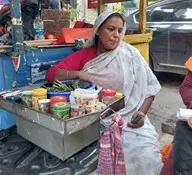
Akhi, a 40-year-old widow, involving in selling tea, betel leaf & cigarette said, “The job of beauty parlour was demanding but it was not possibloe for me to struggle alone by balancing the demands of work and motherhood. That is the reason I left that work and now involved with this trading business which is not well-enough but still I can balance to maintain my family and earn something for a livelihood.” |
|
|
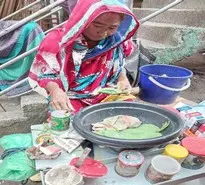
Ambia (42) selling betel leaf & cigarette said, “After getting married I found my husband was addicted and for this he died earlier. I became widowed at an early age and struggled for survival with my baby boy alone. Till then I received no help from anyone and moved to Dhaka and got involved in this business. At this age I am living all by myself and if I get some help it may give a bit relief for the coming days.” |
|
|
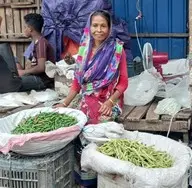
Pervin (56 years) involved in vegetable selling whose husband is a rickshaw puller said, “I have husband but still I have to struggle with family needs because, even if he goes for work one day, he will spend the earning for next three days. I need to earn to maintain my family.”
|
|
|
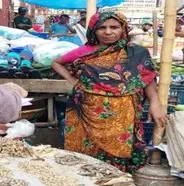
Aklima Khatun (57 years) involved in selling dried fish who was interviewed earlier mentioned, “Women traders rarely sit in the shaded marketplaces for trading; women are mostly in the open area. Sitting in the open place is more flexible for women than sitting in the shaded place as the men traders try to dominate them on those places.” |
Advocacy Meeting with Market Management Committee of Karwan Bazar and Beneficiary Women Traders
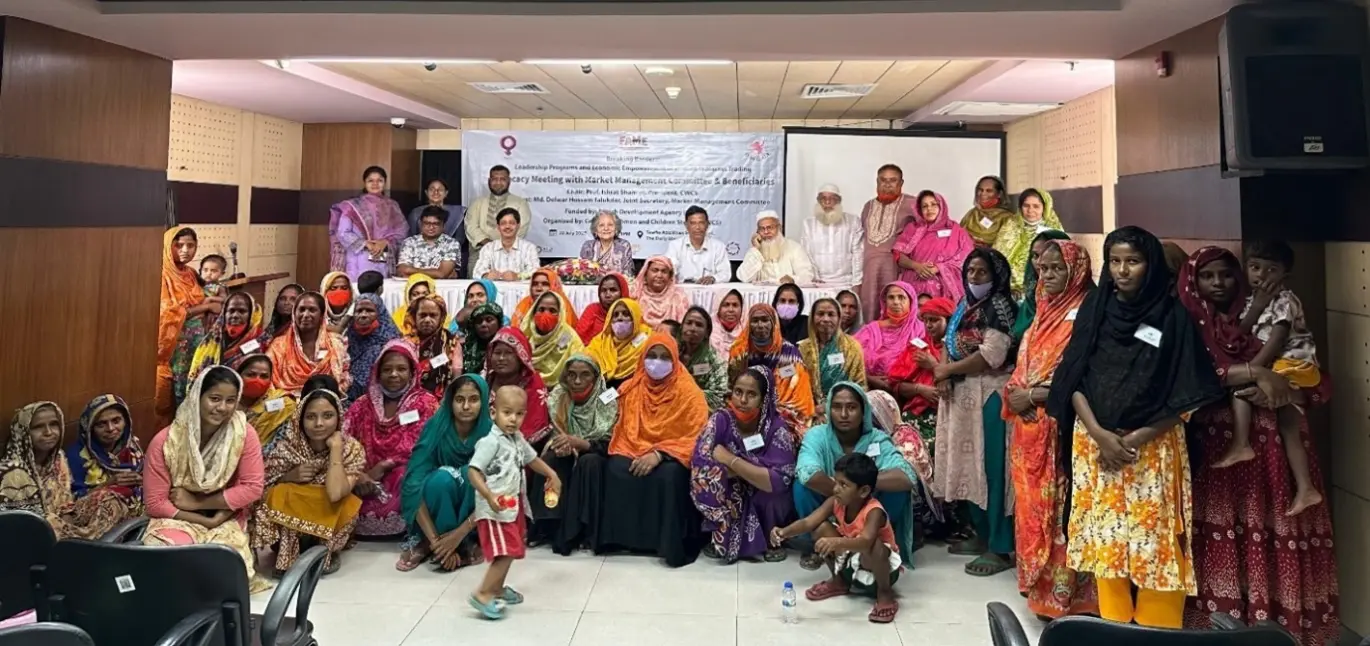
Group picture of the Market Management Committee, Women Traders and the Guests at the Advocacy Meeting on 22 July 2025 at Dhaka.
Welcome speech:
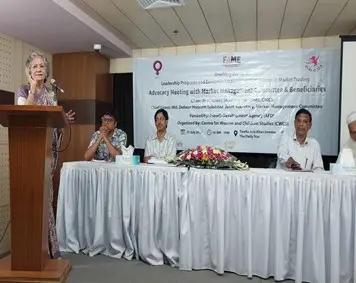
The meeting started with a welcome speech by Prof. Ishrat Shamim, President, Centre for Women and Children Studies and the Chair of Advocacy Meeting with the Market Management Committee of Karwan Bazar and Beneficiary Women Traders.
Prof. Shamim addressed the participants by saying: "I would like to welcome the distinguished members of the Market Management Committee, Project Coordinator of the FAME Project representing DWCCI, Creative Lead, The Daily Star and our beneficiary women traders from Karwan Bazar. Thank you all for making the effort to be here today.”
“I believe that these women from such small-scale, informal trading came there in a seminar hall like The Daily Star for the first time. I am happy to see you all in person today for the first time. Under this project we hope to provide some support to improve your economic situation. I have heard that many of you struggle to run your trading properly due to lack of money or resources.”
“The purpose of today’s advocacy meeting is to introduce you to the Market Management Committee, so that if you face any problems, you can confidently approach them directly without hesitation. We have one kind of relationship with the women traders as our beneficiaries, but the Market Management Committee has a different kind of relationship with them, since they are present in the marketplace all the time. Our goal is to help strengthen the connection of women traders with the Market Management Committee so that these women feel comfortable approaching them directly. Also, we want the Committee to take the safety and security measures of these women seriously. If anyone tries to evict them from their trading place, where will they go? That’s why today’s meeting is very important to bring these issues forward and work together for future solutions."
Presentation: Role of women in market trading & key findings from Baseline Survey:
Khadija Begum, Project Coordinator and Sadia Afrin Hema,
Field Officer presented the findings of the Baseline Survey highlighting the
economic activities, vulnerabilities, and challenges faced by women traders in
Karwan Bazar. The women
were chosen based on their business experience, market presence, and social
vulnerability. Most of them are involved in small-scale trading like
vegetables, tea, spices, fish etc. The survey revealed that many of them face
personal challenges, with limited education where 31.7 percent are illiterate
and only one has completed higher secondary education. Financially, most women
run businesses with very low capital, often below Taka 1500. Major challenges
they face include lack of capital (93.3%), insecurity (83.3%), harassment
(50%), poor infrastructure, and limited skills in managing their businesses.
The findings stressed the urgent need for safer market spaces, regular support, and greater inclusion of women in decision-making. The presentation concluded with a video clip featuring interviews from the baseline survey.
Speeches of Guest Speakers:
Md. Nasir Uddin, Project Coordinator of the FAME Project representing the DWCCI emphasized,
“Women traders need safe and secure spaces to conduct their businesses without fear of harassment or encroachment. I urge the Market Management Committee to extend full support to the 50 selected women traders, recognizing their potential to contribute meaningfully to their families and the local economy.” On behalf of DWCCI and the FAME Project, “I would like to congratulate CWCS for their hard work and commitment, and the women traders for their determination and courage. CWCS is setting an example for others and showing that women can lead and succeed in business when given the right opportunities. DWCCI remains committed to supporting initiatives that empower women economically and help them take leadership roles in their communities.”
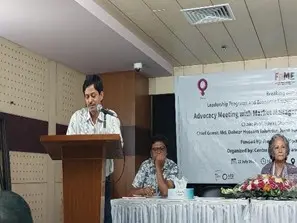
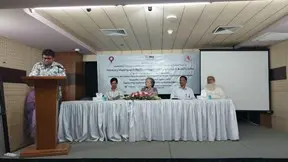
Shuvom
Khan, Creative Lead, The Daily Star was present at the meeting as one of the guests who have
emphasized the importance of inclusive market environments and women’s
contributions to the informal market trading. He especially addressed the women
traders in his speech and said,
“Two things are necessary for achieving success; one is support and the other is will power to grow. As you said the place you are trading is not any authorized place, you are working in front of their shops, so they are supporting you otherwise you won't be able to continue it. The biggest truth right now is you all are living by your own trading. However, the struggle is, you are earning in an honest way not doing anything unethical. And so, I believe you have the will power to grow better. I hope you will be able to do it as CWCS is beside you.”
Voices
of the Women Traders:
Shefali, fish seller:,
“I came to Karwan Bazar 25–30 years ago from Faridpur after losing my parents as a child, and since then I’ve been struggling alone, doing whatever work I could to survive. Now looking after my sick husband and managing our family expenses by selling fish. Life has been hard and lonely, but if I receive any support from your initiative, it could bring me a little hope and help me live with dignity.”
Nargis, vegetable seller:
“I sell vegetables at Karwan Bazar to support my family. I grew up poor, without an education, and later faced problems in my marriage. I came to Dhaka and chose to do what my mother did to sell vegetables. I decided to work and stand on my own feet. The Market Management Committee helped me a lot. Without their support, I couldn't have found a place to trade in front of the shops. When the city corporation tried to evict us, a Market Management Committee member, Bulu Chairman, stood by us. He told us to come to the market balcony if anyone harassed us again. His support gave me courage.I believe if women do business, we can live independently and support our families better. I work alongside my husband and contribute to the household. That gives me pride. People in the market have helped us a lot, and without them, I wouldn't have been able to continue my business.”
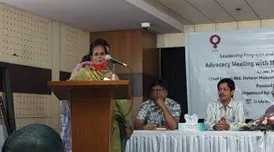
Open discussion:
Some of the women have shared their opinions during the open discussion highlighting their struggles and also their gratitude to get the place to share their opinions in the presence of the Market Management Committee.
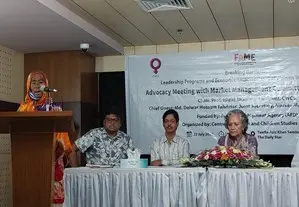
Ambia, tea, betel leaf and cigarette seller:
“I have lived a life full of struggle and loneliness from working unpaid in others' homes to now surviving alone by selling betel leaves, and cigarettes beside the rail line of Karwan Bazar, with no family, no address, and no one to call my own. Today, I have come to this meeting not just to share my pains, but also to be heard and to remind myself that I still exist.”
Akhi, tea, betel leaf and cigarette seller:
“I have a daughter. I struggled but I still continued my daughter’s education. I used to work as a domestic help to manage my household expenses. Then I thought of having my own business and started selling betel leaves and cigarettes. Recently, one day while trading on the roadside, I met with Khadija apa and she took my name for this program. I hope it will be helpful for us if you help us with our trading. We are fortunate to be here today and I am grateful to all of you.”
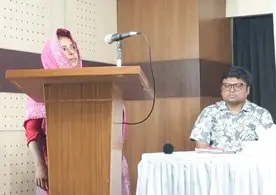
Members of the Market Management Committee acknowledged and expressed willingness to explore feasible solutions for space allocation and enhanced safety measures for women traders.
Anwar Hossain, Member, no 1 DIT market, Market Management Committee, Karwan Bazar:
“On behalf of all these women whom CWCS have selected under this project, we look forward to CWCS that they will share their stories more widely. These women always face harassment, humiliation and extortion at the marketplace. Governments change but extortionists never change. They just change their face but continue their harassment and extortion. We want CWCS to bring these struggles to the mainstream media. In addition, I want CWCS to manage fixed trading space from the Dhaka City Corporation for these women traders. There are the spaces in the porch of the markets that are leased. But these women cannot manage those spaces. If CWCS can manage such spaces for them, it will be the best solution for their trading at the marketplace.”

Md
Nurujjaman, Advisor, no 2 building, Market Management Committee:
“I appreciate and support this commendable initiative of CWCS for working with these vulnerable women traders. Since 1972, I have been doing business at Karwan Bazar. I know these women sitting before us who are continuously doing very hard work and struggling to buy raw materials and sell them in the market. They usually come early in the morning and close trading around 10 pm at night. They trade on the road for about 16-17 hours. These women trade in front of our shops, sometimes the shop owners complain to us saying why we do not evict them from this place as it is causing problems for them. Sometimes, we behave inappropriately with them depending on the situation; but then we reflect that if they were our relatives, how would we treat them? Understanding their condition, we try to help them either openly or privately. There are 342 shops in no 2 market building. Karwan Bazar is a place where even if someone arrives after starving for 2–3 days, they would not go back hungry. Trading goes on 24 hours a day, and in fact, the volume of trade at night is even higher than during the day. Lastly, I want to thank CWCS, especially Prof Ishrat madam for her great enthusiasm for working with these women traders.”
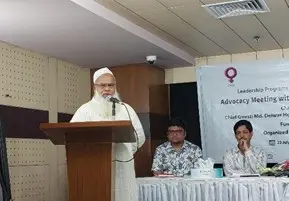
Speech of Chief Guest
Chief Guest, Md Delwar Hossain
Talukdar, Joint Secretary, Market Management Committee:
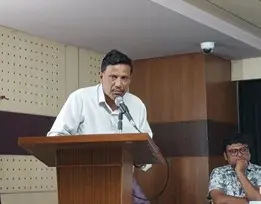
“First, I must mention that what makes me happy is that the 50 women traders selected by Khadija and Sadia, have all been trading in the market for a long time, many for 20 to 30 years. I do not see anyone here who joined the marketplace just 2 or 6 months ago. So, I must say, the selection is truly appropriate.”
“I have been representing the Market Management Committee for 40 years, and during this time, I have seen these women face countless forms of hardship. I have known many of them since they were children, yet their lives have hardly changed. Their parents were involved in market trading, they are doing the same, and now even their children are following the same path. They have not been able to break this cycle because they had no proper guidance.”
“Over the years, many NGOs have come, given some money, and then left. Some even tried to deceive them by offering support at first, only to trap them later with interest-bearing loans. Finally, I want to conclude by saying that this initiative of helping these vulnerable women is undoubtedly thoughtful. I hope this project will be extended thus more women could be helped to have a dignified life for themselves. We stand beside every woman in the marketplace. If any challenge arises, bring it to us we are committed to act swiftly and ensure a safer, more inclusive trading environment."
Closing Remarks & Vote of Thanks:
Prof. Ishrat Shamim, President, CWCS concluded the meeting with her closing remarks and vote of thanks. She mentioned: “When I first came up with the idea of starting this project in Karwan Bazar, I thought if I am going to work there, then of course there must be a Market Management Committee with whom I need to get involved. They are the ones who are always there to monitor the marketplace and maintain a healthy trading environment. I envision that we have to introduce our beneficiary women traders with the members of the Market Management Committee from the very beginning of the project.”
“Today, after coming here, I realized that the Committee members have known the women traders for a long time and it is really appreciable. The women traders have all been working in this marketplace for many years, and so have the Committee members. There is already a good connection between them. When I first shared this project idea with others, many people said, 'Apa, are you sure you want to work with these women? What if they do not stay with you? What if they leave?' I would reply, ‘If they leave, there is nothing we can do. But as long as they are here, we will try our best to support them.”
“Initially, we had planned to provide necessary materials and equipment to enhance their trading. We wanted the support to be meaningful and lasting.”
Two-day Skill Training on Gender Equality, Women Rights, Leadership and Business Plan for Women Traders
Empowering Women Market Traders through Skills and Leadership – Batch 1
The 2-day Skill Training for Women Traders on Gender Equality, Women Rights, Leadership and Business Plan for Economic Empowerment was organized by Centre for Women and Children Studies (CWCS) on 5-6 August 2025 at Seminar Room, Universal Tutorial School, Dhaka. Fawzia Khondker, Gender Specialist and Executive Director, Pragraoshor was the trainer of the First Batch.
Day 1 Training
Prof. Ishrat Shamim, President, CWCS in her welcome speech dedicated to the women traders said:
“You are skilled, hardworking women who are running your own businesses. You are not poor. The real problem is that we, as a society, often fail to plan and support you in the right way. That is what we are here to make a change. It is important that you also know the rules of business, how to run your trade independently and sustainably. We are here to support you, but we cannot decide everything for you. You need to think carefully about what materials and resources you need to grow your business. Once you identify those needs, we will do our best to assist you.“I believe, if we work together, we can make sure you get a safe and respectful space in the marketplace where you can run your business with dignity. I hope you will stay with us on this journey. This is not just a project, it is a movement for women’s rights and economic empowerment.”
Prof. Nusrat Sultana, Treasurer, CWCS highlighted in her speech:
“At CWCS, we always think with a women-friendly and ambitious mindset. We believe that women like you have immense potential, and it is our responsibility to turn our thoughts and ideas into reality, by working hand in hand with you. In this trading journey, managing finances and understanding accounts is very important. We will try our best to guide you on these topics so that you can improve your trading, manage your earnings better, and move forward independently. We are here to support you, but the main role will be yours because your growth is in your own hands. Together, we will strive to make your businesses stronger and your future brighter.”
Md Nasir Uddin, Project Coordinator, FAME, DWCCI, said,
“I would like to express my sincere gratitude to Professor Ishrat Shamim Madam and CWCS team for taking on such a significant challenge and leading this important initiative. She has undertaken the responsibility of working on your rights and creating awareness about your businesses. It is commendable that CWCS has committed to ensuring the safety and security of women traders in the market. I deeply appreciate their dedication and efforts. I sincerely hope this initiative will achieve its objectives and bring success in empowering women in market trading.”
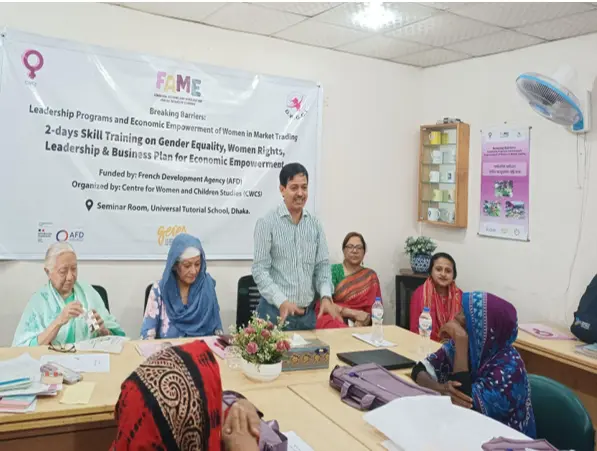
Message from Trainer, Fawzia Khondker during the welcome session,
“It is a great opportunity for me to be here and listen to your stories and experiences. I want to emphasize that you must stay united and support one another. Without unity, we cannot move forward together. Only through collective strength and solidarity can we overcome challenges and achieve success.”
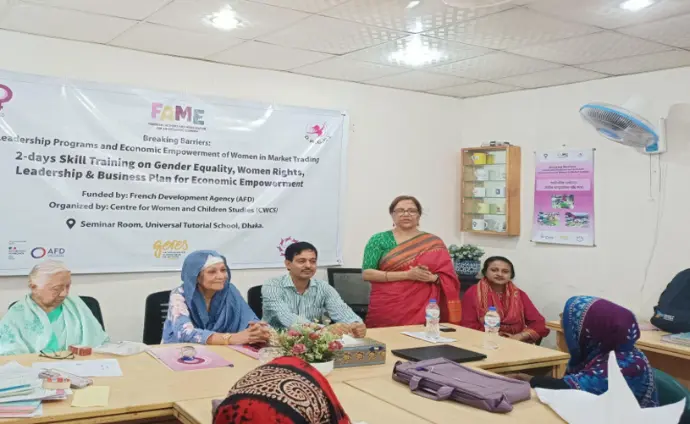
Icebreaking:
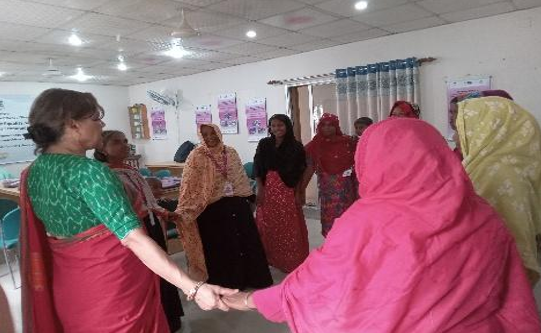
The trainer started the training with an interactive game as an icebreaker making a circle and holding hands together. The participants introduced themselves by sharing their names and the type of trading they are involved through this simple and engaging activity. It helped to know each other, relax, and feel more comfortable before a training session.
Session 1: Understanding Gender Equality
The session began with an interactive introduction to the concept of gender equality, designed specifically for women with limited or no formal education. The trainer initiated the discussion by exploring the identity of women and highlighting the multiple roles they play in their families and communities such as mothers, wives, daughters, caregivers, and earners.
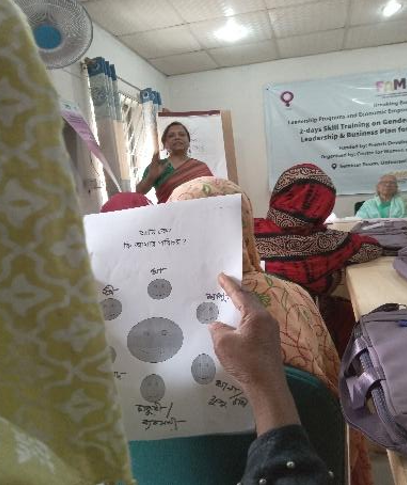
To make the session engaging and relatable, the trainer distributed picture cards among the participants. Each trainee was asked to identify and share the roles they perform in their families. This opened up a space for self-reflection and empowerment.
One of the participants, Shathi, who runs a small tea and betel leaf stall in the marketplace, shared proudly, “We may have different personal roles, but one identity we all share is that we are businesswomen.” This powerful statement resonated with the group and helped the participants feel united in their economic contributions.
Another participant, Mukta Nesa, who sells fish oil and scales, shared a painful personal experience saying, “When a boy is born, everyone celebrates but when my daughter was born, no one was happy. It felt like a curse. This kind of discrimination still exists in our society.” Her words reflected the deep-rooted gender bias that many women in the group could also acknowledge.
Following these emotional and insightful discussions, the trainer facilitated a group dialogue on the similarities and differences between men and women focusing on equal rights, value, and potential, while also addressing the social and cultural barriers that hinder women's full participation. The session created a supportive and respectful environment where the women could openly share their lived realities, recognize their strengths, and begin to see themselves not just as survivors, but as capable individuals and entrepreneurs.
Session 2: Women’s Rights in Everyday Life
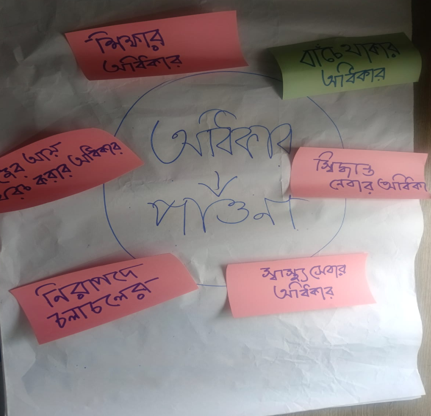
The second session focused on raising awareness about women’s rights in everyday situations, both at home and in the marketplace. The trainer began by asking a simple question: “What do you understand by rights?”
Participants were encouraged to share their thoughts, and many expressed what they believed their rights to be such as the right to speak, to work, and to be treated with respect. This open discussion allowed everyone to feel heard and helped set the foundation for understanding their rights more deeply. During the discussion, some women traders shared their personal experiences from the marketplace. Ambia Khatun, a tea stall and betel leaf seller, said with deep frustration, “Some people do not respect us. They treat us rudely and even force me out from the place where I try to earn my living.”
To help the women better understand their rights in real-life situations, the trainer organized a role-play exercise. Participants were divided into three small groups. Each group was given a scenario based on common challenges faced by the women in the marketplace while trading.
After the role plays, the participants gathered to reflect on what they had acted out. The session ended with positive reinforcement from the trainer, encouraging all women to be aware of their rights and to support each other as a community, especially in public spaces like the marketplace.
Session 3: Building Confidence & Voice
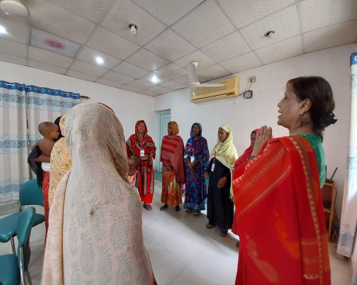
In this session, the trainer helped the women believe in their own abilities and practice speaking with confidence. The trainer guided them to write down their strengths. Each woman drew a picture that represented her strengths and shared what she was good at. After they shared, the facilitator reinforced the message, “You are a leader in your own way.”
After this trainer stands in a circle with the trainee. Each woman says her name and what she sells in a loud voice. Everyone celebrates each one loudly with applause. Then the facilitator invites participants to reflect and share their thoughts like: “What stops us from speaking?” Participants discuss the barriers, fears, or challenges that prevent them from expressing themselves.
“What happens when we do?” Participants shared the positive changes, outcomes, or impacts that occur when they find their voice and speak up.
The facilitator encourages open dialogue, ensures everyone has the opportunity to contribute, and summarizes key points from the discussion to highlight the importance of speaking with confidence.
Session 4: Leadership in Practice
The trainer divided participants into small groups and given real-life situations to act out. Each group performed their scenario, followed by a group discussion. The activity encouraged the women to think critically, express themselves, and practice leadership in a safe and supportive setting.
After each role play, the trainer facilitated a discussion to reflect on the experience, focusing on what makes a good leader.
Shiuli, a tea stall and betel leaf seller, shared her view:
“A leader is someone who can find solutions to certain problems.” Shathe, also a tea stall and betel leaf seller, added: “A leader is someone who can give good advice in any situation.”
Action Planning:
In this session, the facilitator invites each woman to complete the sentence, either verbally or by selecting a picture that represents her answer: “From tomorrow, I will…”
The facilitator provides a few examples to inspire participants:
● “Speak up when I’m not treated fairly.”
● “Help another woman.”
● “Teach my daughter she can lead too.”
Then the facilitator gave them some work to think about at home and asked them to share it the next day. After this activity then group clap for each woman and take group photos.
Day 2 Training
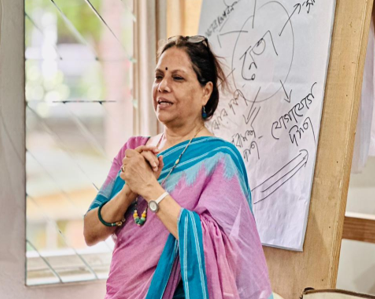
The second day of training began with an icebreaking session, where all the women, along with the trainer, sang songs together and warmed up to focus on the day’s session. At the beginning trainer recapped the discussion from day-1 and also reminded everyone: “Living itself is joy, no matter how much hardship or struggle we face, we will live on. Together we sing, together we create joy, and together we shape our lives.”
Session 1: What Is a Business Plan?
In this session trainers help the women traders to understand the 4 basic parts of a micro business plan. She asked the women to think about these 4 questions: what do I sell ? What do I need to buy ? Who will buy these from me? and How do I earn?
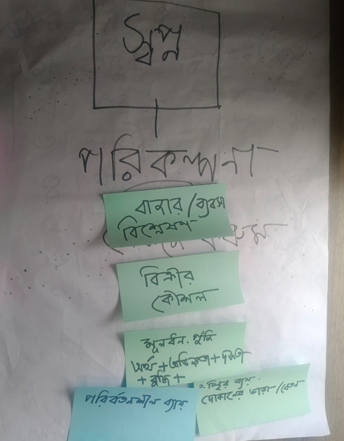
Then she said, “We need to have a plan for our trading. Without planning we will not be able to grow.” The trainer briefly discussed having a business plan.
The trainer emphasized starting with a clear dream of what you want to achieve. Once you have a dream, you must create a plan to turn it into reality. This begins with analyzing the market to understand where and how to set up your business for the best results. Planning and strategy are essential to attract and retain customers. Investment is also crucial, which includes not only money to purchase goods and cover expenses but also skills to manage operations effectively. By combining vision, planning, market knowledge, strategic thinking, financial resources, and skill development, traders can work towards long-term business success.
Shiuli said, “Yes, if we find any better work to do of course we want to do it and develop our livelihood.”
Sathe said, “There is a free space in front of my house where I live under the flyover and beside the railway station. I was thinking of having my own nursery in front of my house.”
After the discussion, the trainer introduced an activity. Through this activity, the trainer explained that every business is a cycle when we plan carefully, we are able to earn better.
Session 2: Understanding Costs & Profits
In this session, trainers discussed expenses and profit in daily trade. She tried to make the women traders understand that there are 2 types of costs: Fixed cost and Daily cost. We have to keep all these in mind while planning. Fixed costs are house rent, trading equipment which remain constant, and daily costs are like the goods you need to buy on a daily basis, transportation, and daily meals, which vary.
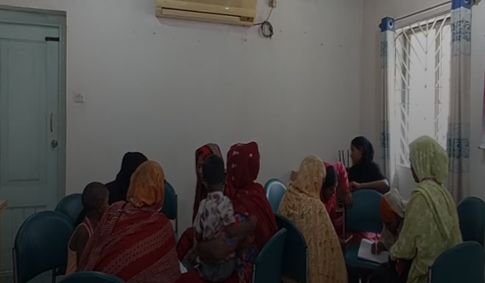
She emphasized that having capital alone is not enough; traders also need effort, market knowledge, experience, and a clear understanding of their trade. It is important to decide who will manage the business whether oneself, a family member, or an employee but the trader must remain actively involved. The trainer also warned about the risks of taking loans or buying assets in someone else’s name, as this can lead to losing ownership if circumstances change. Her key message was that women must ensure they are the rightful owners of their businesses to protect their livelihoods.
Session 3: Managing Money Simply
The trainer began by asking women traders how they would save money. Participants shared their existing process of managing money. Mst. Selina Akter, a vegetable seller, said, “I earn Taka 300 every day, but by the end of the week, I have nothing left.” The trainer arranged an activity called the “Saving Circle.” Participants practiced dividing a day’s earnings into three parts: for family, for business and for savings. The trainer then explained to them about banking savings systems and mobile savings systems.
Session 4: Plan for Improving Their Business
In this session, the trainer divided the participants into three groups according to their business patterns. Each group was assigned the task of identifying what they needed to improve their ongoing businesses. The participants discussed their challenges and brainstormed possible solutions within their groups. Each group presented their findings to the entire session. They explained the areas of improvement they had identified and the resources required.
Following the presentations, each participant worked individually to prepare a budget based on their specific needs. This activity helped them develop a clear, need-based plan for improving their businesses. The women traders suggested the materials they need to enhance their current trading.
Group Picture & Certificate distribution
The training ended by providing certificates to all the participating women traders by Nusrat Sultana, Treasurer, CWCS and Prof. Ishrat Shamim, President, CWCS and vote of thanks.


Empowering Women Market Traders through Skills and Leadership – Batch 2

The 2-days Skill Training for Women Traders on Gender Equality, Women Rights, Leadership and Business Plan for Economic Empowerment of Batch 2 was organized by Centre for Women and Children Studies (CWCS) on 15-16 August 2025 at Seminar Room, Universal Tutorial School, Dhaka. Umme Kausar Sumona, Team Leader, PARAYAN (Inclusiveness) Project, Aparajeyo Bangladesh was the trainer of this training batch.
Day 1 Training
Prof. Ishrat Shamim, President, CWCS in her welcome speech shared her vision for this project, emphasizing the importance of women’s empowerment through knowledge and practice. She reminded participants that in our everyday lives, we are always involved in some form of exchange or transaction. Whether it is buying or selling, it is important to know how to communicate, how to negotiate, and how to understand the value of goods and services.
 She mentioned:
“The way we talk to people, the way we set prices whether while buying or
selling makes a difference. We need to recognize which customers may pay better
and how to sell at a fair price. These skills are not only important for
business but also for strengthening our confidence as women entrepreneurs. We will learn all these
things in this meeting including what is our rights as a woman thus we can
speak for ourselves when needed. It is very important to be aware of our rights
to raise our voice against any unlawful thing that happens to us.”
She mentioned:
“The way we talk to people, the way we set prices whether while buying or
selling makes a difference. We need to recognize which customers may pay better
and how to sell at a fair price. These skills are not only important for
business but also for strengthening our confidence as women entrepreneurs. We will learn all these
things in this meeting including what is our rights as a woman thus we can
speak for ourselves when needed. It is very important to be aware of our rights
to raise our voice against any unlawful thing that happens to us.”
Prof. Shamim concluded her note with encouragement, expressing her hope that through this training, women will not only learn business strategies but also develop leadership qualities that will help them build a stronger future.
 Prof. Nusrat
Sultana, Treasurer of CWCS highlighted, “We always work with a
women-friendly and ambitious mindset in CWCS. We strongly believe that women
like you have immense potential, and it is our duty to stand beside you in
turning that potential into reality.In this business journey, learning how to
manage finances and accounts is very important. Through this training, we will
do our best to guide you so that you can improve your businesses, manage your
earnings better, and move forward with confidence. Remember that your growth is
in your own hands. We are here to support you, and together, we can make your
businesses stronger and your future brighter.”
Prof. Nusrat
Sultana, Treasurer of CWCS highlighted, “We always work with a
women-friendly and ambitious mindset in CWCS. We strongly believe that women
like you have immense potential, and it is our duty to stand beside you in
turning that potential into reality.In this business journey, learning how to
manage finances and accounts is very important. Through this training, we will
do our best to guide you so that you can improve your businesses, manage your
earnings better, and move forward with confidence. Remember that your growth is
in your own hands. We are here to support you, and together, we can make your
businesses stronger and your future brighter.”
Trainer, Umme Kausar Sumona, Team Leader, PARAYAN (Inclusiveness) Project, Aparajeyo Bangladesh introduced herself to the participants in the welcome session and briefly described her experience to them and described her wish to have some wonderful moments with these women traders during this training.
Icebreaking:
 The session began with the trainer
conducting an interactive icebreaker game to set a lively and welcoming tone.
Participants introduced themselves by sharing their names, the type of trading
they are engaged in, and a childhood game they remember playing together. The games
mentioned included Si Buri, Golla Chut, 5 Guti, and 10-20.
The session began with the trainer
conducting an interactive icebreaker game to set a lively and welcoming tone.
Participants introduced themselves by sharing their names, the type of trading
they are engaged in, and a childhood game they remember playing together. The games
mentioned included Si Buri, Golla Chut, 5 Guti, and 10-20.
One participant, Akhi, expressed, “It felt as if I had gone back to my childhood.” The activity sparked smiles and laughter, helping everyone feel comfortable and connected. The nostalgic sharing of childhood memories fostered a friendly atmosphere, encouraging active participation from all.
 Session 1: Understanding Gender Equality
The session began with the trainer inviting participants to share the kinds of remarks they often hear in the marketplace simply because they are women. Participants shared examples of gender-based verbal harassment they used to face in the marketplace:
Ø Rukeya : “Why are you here in the market, woman?”
Ø Marjina: “Why do you talk so much? As a woman, you should not speak this much. Why are you here selling and buying in the market?”
Ø Akhi shared an incident where a man insulted her for refusing to give goods on credit, which escalated to verbal abuse. She resisted and confronted him, eventually leading to an apology from the man in front of others.
The
trainer emphasized that while it is necessary to protest against injustice, it
is equally important to learn how to protest effectively. Men are rarely
subjected to such comments, yet women face them regularly just because of their
gender.
The discussion then moved to household responsibilities. Participants unanimously said that cooking, cleaning, childcare, and caring for the sick are women’s work. When asked whose responsibility it is to bear medical expenses for a sick mother, there was hesitation. Eventually, one participant said it should be men’s work, but admitted that in reality, women end up paying.
Akhi shared a domestic violence experience where her husband poured a jug of water on her head over a minor household matter. She stood her ground and refused to cook for a week, threatening to return to her father’s home if such behavior continued.
The trainer highlighted the common sayings in our society such as “Ovagar goru more, vaggobaner bou more” and asked who creates the division of work between men and women. While one participant initially said “Allah,” the trainer clarified that while God created men and women differently, it is society that assigns unequal roles and responsibilities.
Participants also reflected on how women can be unsupportive toward other women such as mothers-in-law belittling daughters-in-law regardless of how much work they do, restricting food portions for young girls, and expecting daughters-in-law to handle all household tasks.
Examples of gender bias in caregiving were also discussed. When men are sick, they receive special food and attention, but when women are sick, they are accused of avoiding work.
A powerful moment came when Akhi disclosed that her husband brought another woman into their home. The trainer explained that fear of violence, divorce, or having nowhere to go often silences women even when they recognize injustice.
The session concluded with the trainer encouraging participants to see themselves as progressive women and to recognize their own strengths and capabilities. Jakia reflected that she now felt braver and more aware of her own abilities, admitting she had never considered her many skills before.
Session 2: Women’s Rights in Everyday Life
The trainer began the session by distributing tokens with pictures of fish and flowers. Women holding the same tokens formed groups, which resulted in two groups: “Fish” and “Flower.”
 |
 |
||
The trainer explained the activity separately to each group. After group discussions, they acted out real-life situations that highlighted the daily struggles and arguments they face in the marketplace.
The role play reflected the reality of their everyday life. Marjina said, “We acted the way we face problems in the market every day. People treat us like this, and we have to deal with them.” Ambia added, “Sometimes people argue with us and even try to evict us from our place.” Jakiya shared a powerful story about harassment from local leaders who pressured her to sell goods cheaply or for free. She recalled how she confronted them: “I told them I don’t need to know you. I have two hands, you also have two hands, but my hands are stronger because I work under the sun on the ground while you sit inside AC. We survive here only by fighting such battles.”

 The trainer then reminded everyone
that before solving problems, they must first identify them: “If we don’t
recognize our problems such as lack of space, capital, harassment from local
musclemen or politicians, or mismanagement of money we cannot find solutions.
If we improve our trading, earn a little
more, and live with dignity, people will respect us automatically.” Later, the two groups, one named
Fish and another Flower were given teamwork. One group identified the problems
they face, while the other discussed possible solutions.
The trainer then reminded everyone
that before solving problems, they must first identify them: “If we don’t
recognize our problems such as lack of space, capital, harassment from local
musclemen or politicians, or mismanagement of money we cannot find solutions.
If we improve our trading, earn a little
more, and live with dignity, people will respect us automatically.” Later, the two groups, one named
Fish and another Flower were given teamwork. One group identified the problems
they face, while the other discussed possible solutions.
Fish Group members were Jakiya, Ambia, Rukeya , Shahanaj & Banesa:


Jakiya and Rukeya explained that most of them are vegetable sellers. They shared that old woman receive no respect, literacy is a major barrier, poverty is constant, and house rent is unaffordable, “even a small tin-shed house costs 5,000 taka, while our daily income is barely 200.” Customers also exploit them because they are women and often refuse to pay fair prices.
Flower Group members were Akhi, Hasina, Marjina, Ripa & Panna:


Akhi and Marjina highlighted that the root causes of their problems is lack of money and business capital. Daily earnings finish by the end of the day, leaving no savings. They also struggle because their selling spots are insecure, and political leaders often evict them. “If we had the courage to protest together, maybe we could solve some problems. If we had a samiti (cooperative), we could at least save some money,” they added.
The trainer encouraged the women to start their own samiti and set aside a small part of their daily earnings. “When we have money in our hands, we will naturally feel confident. We must also know our rights and speak boldly with courage. Our voice will grow stronger when we unite and raise it together.”
Jakiya concluded powerfully: “We must achieve our rights through the strength of our words.”
Hasina shared a success story of her grandmother, who started by selling leaves with only 40 taka and gradually grew her business, turning it into 120 taka. This story motivated the group to believe that even small beginnings can lead to growth.
Session 3: Building Confidence & Voice
After lunch, the third session began with a warm-up activity where participants sang together, creating an energetic and joyful atmosphere.
 The trainer then distributed VIPP
cards to each participant and instructed them to draw any picture that came to
their mind. At first, many participants hesitated and said, “I cannot draw.”
However, once they began, everyone was able to create a drawing. The trainer
collected the drawings, pasted them on flipcharts, and wrote down the names of
the participants beside their artwork.
The trainer then distributed VIPP
cards to each participant and instructed them to draw any picture that came to
their mind. At first, many participants hesitated and said, “I cannot draw.”
However, once they began, everyone was able to create a drawing. The trainer
collected the drawings, pasted them on flipcharts, and wrote down the names of
the participants beside their artwork.
Reflecting on the exercise, the trainer explained: “At the beginning, many of you thought you could not draw. But once you started, you realized that you could successfully complete your drawing. In the same way, when you start your work with confidence, you will succeed.” Marjina added, “We expressed each person expressed their instant thoughts through the drawing.” This showed how creativity, voice, and self-confidence naturally emerge when women are encouraged to take the first step.
Session 4: Leadership in Practice
 The fourth session began with the trainer
telling the participants: “You are all leaders. Now let us think what are the
qualities of a good leader?”
The fourth session began with the trainer
telling the participants: “You are all leaders. Now let us think what are the
qualities of a good leader?”
The women actively shared their thoughts:
Ø Ambia: “A leader has the confidence.”
Ø Jakia: “A leader has to raise her voice against violations.”
Ø Ripa: “A leader must listen to others’ arguments and complaints.”
Ø Akhi: “A leader should be polite and have a soft heart.”
After listening to their responses, the trainer summarized the discussion and explained the qualities of leadership in detail. She encouraged the participants to nurture these qualities within themselves so that each of them could become strong and effective leaders in their daily lives. To reinforce the lesson, the trainer introduced a game. She explained the rules and asked each participant to say three positive sentences about herself. This activity helped the women practice self-affirmation, build confidence, and recognize their own strengths as leaders.
The trainer ended the training of day 1, assigning the task to think about how they can improve their business which will be discussed on the next day. Finally, it was closed by taking a group photo.

Day 2 Training
The second day of training began with an icebreaking session, where all the women, along with the trainer, sang songs together and warmed up to focus on the day’s session. At the beginning trainer recapped the discussion from day-1 and also reminded everyone: “Living itself is joy, no matter how much hardship or struggle we face, we will live on. Together we sing, together we create joy, and together we shape our lives.”
Session 1: What Is a Business Plan?
 The training
session began with an interactive discussion where the trainers asked the
participants, “What is business?” Each participant shared their thoughts. Panna
expressed simply yet powerfully: “Business is our sustenance.”
The training
session began with an interactive discussion where the trainers asked the
participants, “What is business?” Each participant shared their thoughts. Panna
expressed simply yet powerfully: “Business is our sustenance.”
Next, the trainers raised the question, “Why do we need to show a good approach with customers?” Marjina responded: “If we behave well, customers will keep coming back to buy from us. But if the product is not good, even regular customers will stop coming.” This highlighted the importance of both behaviour and product quality in building customer trust.To build resilience, the trainers asked participants to reflect on calmness in business situations. Hasina shared her real-life experience: “One day, a customer behaved very roughly and created a noisy environment, which became almost unbearable. It was very difficult for me to control my patience. At that moment, I called some others and explained the situation to them. Then, everyone helped me to manage and control the situation.” This story emphasized the need for patience, teamwork, and presence of mind while facing challenges.
The trainers then introduced a series of engaging games to build unity, confidence, and problem-solving skills. One of them was named Ekotai Ball which means unity is strength where everyone sat in a circle and participated actively. Later, they played a musical chair game. After the activity, the trainers asked about the learning. Ambia insightfully said: “We learn, no one gives us the place for us. We have to create our own place.”
Another role-play activity was conducted where the participants were divided into two groups one as traders and the other as customers. The “customers” created a scene with the “traders,” and later all participants sat together in a circle to reflect. The trainer concluded: “We must have a plan to successfully run a business. Without a plan, we cannot handle problems effectively.”
To further demonstrate the importance of guidance and clarity, the trainer drew a picture of a cow without one horn and asked a participant to complete it while blindfolded. At first, without instructions, the participant was unable to draw it properly. However, when clear instructions were given, the task was completed correctly. The trainer summarized the lesson: “We learned through this game that if we help someone who does not know the rules, they can also grow like us.”
Session 2: Understanding Costs & Profits
 The session began
with the discussion that in business, every taka spent and earned must be
understood carefully. Trainers reminded that profits only come when costs are
managed wisely.
The session began
with the discussion that in business, every taka spent and earned must be
understood carefully. Trainers reminded that profits only come when costs are
managed wisely.
Zakia
shared her inspiring journey: “On the very first day, I collected coriander
leaves and sold them for taka 70. After that, I bought other kinds of
vegetables and started selling them. Today, I feel so proud that I can buy
vegetables worth Taka 5,000 every day and sell them successfully.” She explained
how she started with only taka 200,  increased to taka
400, then taka 800, and gradually expanded her business. However, she added
that even though her business is running, it is difficult to save anything
since all her income is spent on daily needs.
increased to taka
400, then taka 800, and gradually expanded her business. However, she added
that even though her business is running, it is difficult to save anything
since all her income is spent on daily needs.
This discussion highlighted the importance of recognizing both costs and profits so traders can track growth and plan ahead. Through the discussion in the trainers emphasized without keeping proper accounts of costs and earnings, it is impossible to know whether the business is truly growing. Careful calculation is the key to sustainable profit.
Session 3: Managing Money Simply
 In this session,
trainers make the participants understand that personal money and business
money should never be mixed together. To make this concept clearer,
participants were divided into two groups and asked to draw pictures showing
how they manage their money while planning their businesses.
In this session,
trainers make the participants understand that personal money and business
money should never be mixed together. To make this concept clearer,
participants were divided into two groups and asked to draw pictures showing
how they manage their money while planning their businesses.
Akhi shared her experience: “I borrowed taka 1,000 from someone, which I had to repay at taka 200 daily. Then, I sold goods worth taka 1,400. After three days, I returned the loan fully and then started buying goods with my own money.
Now, I keep taka 50 aside every day in a clay bank. At present, I have goods worth taka 5,000 - 7,000 in my shop. My neighbouring shopkeepers also supported me by stopping their own sales of betel leaf so that I could sell more. I have even managed to save a little in the bank.”
Rukeya added another story of learning: “On my first day at the bazar, someone promised me taka 30 for a job but never paid me. The next day, I worked again and got Taka 40. From that, I ate with Taka 10 and saved Taka 30.”
These examples encouraged the group to reflect that discipline in saving and separating money is the foundation of growth. The trainer concluded the session by stressing that business money should always stay in business, and even a small daily saving can build financial strength over time.
Session 4: Personal vs Business Money
The trainers reinforced the lesson: “We must not mix our personal money with business money.” They reminded participants that proper money management leads to business stability and independence.
Panna shared: “I started with only taka 150 capital. Now my situation is a little better, and I even have some savings in the bank.”
The trainers highlighted the need for regular savings and preparation for future risks. They said: “We have to save money to ensure a better life in the future.”
“We must think ahead about risks such as theft at home, health problems when we grow older, or sudden emergencies.”
“For these reasons, it is important to start saving today, even if it is just a small amount.”
This session ended with a strong reminder: personal expenses should never come from business money, and savings are a must for security and growth. The training came to a joyful close making all the participants to repeat self-affirmation to regain their courage and then all participants joined their voices together in singing ‘Amra Korbo Joy’, the Bengali version of the song ‘We Shall Overcome,’ creating a spirit of unity, hope, and determination for the journey ahead.
Group Picture & Certificate distribution
The training ended by providing certificates to all the participant women traders while Md Nasir Uddin, Project Coordinator, FAME, Dhaka Women's Chamber of Commerce and Industry (DWCCI), Nusrat Sultana, Treasurer, CWCS and Prof. Ishrat Shamim, President, CWCS was present including the trainer Umme Kausar Sumona, Team Leader, PARAYAN (Inclusiveness) Project, Aparajeyo Bangladesh. During the closing of the training, the President encouraged the women to always speak for their rights and work for enhancing their lifestyle through the betterment of their trading.


Feedback from 20 trained women beneficiaries
Ambia Khatun (38 yrs) originally from Natore, faced hardship from an early age after losing her father. After moving to Dhaka, she started as a caregiver without pay but soon took the bold step of becoming a street vendor with only Taka 40. She bought 4 bananas for Taka 40 and started her business journey. Now her revolving fund is Taka 2,000 per day on an average.
Present situation: Ambia now lives in Kunipara, Bowbazar, and sells cigarettes and betel leaves in the Katpotti (Beside rail line), Karwan Bazar. She earns around Taka 300 per day. She has a fixed place to sit for trading where other surrounding shop owners know her for a long time. They also support her to carry her trading activities there in a safe environment.
 Feedback
of the training: “Before
attending the training, whenever someone came to buy betel leaves or
cigarettes, many of them used to speak harshly or even verbally abuse me. At
that time, I could not protest or respond. But after this training, I have
learned how to speak up for myself. Now, if anyone says something
inappropriate, I know how to reply politely but firmly. Because of this,
customers no longer dare to harass me. Earlier, some people used to
intentionally disturb me and say abusive language. But now I have started
responding respectfully without engaging in conflict. Even the nearby
shopkeepers began supporting me. As a result, the overall environment of buying
and selling has improved. Apart from that, I also learnt how to keep financial
records. Since then, I have been trying to plan and keep track of my income and
expenses properly, so that I can gradually expand my trading business.”
Feedback
of the training: “Before
attending the training, whenever someone came to buy betel leaves or
cigarettes, many of them used to speak harshly or even verbally abuse me. At
that time, I could not protest or respond. But after this training, I have
learned how to speak up for myself. Now, if anyone says something
inappropriate, I know how to reply politely but firmly. Because of this,
customers no longer dare to harass me. Earlier, some people used to
intentionally disturb me and say abusive language. But now I have started
responding respectfully without engaging in conflict. Even the nearby
shopkeepers began supporting me. As a result, the overall environment of buying
and selling has improved. Apart from that, I also learnt how to keep financial
records. Since then, I have been trying to plan and keep track of my income and
expenses properly, so that I can gradually expand my trading business.”
Brishti Akter (23 yrs) grew up learning the fish scale drying and selling trade from her mother and later started her own business with her husband. Initially, they operated a small shop near the railway line at Karwan Bazar, gradually building experience and stability in the trade.
Present situation: At present,Brishti buys fish scales at Taka 20 per kg, dries them, and sells them for profit, earning around Taka 400 - 500 per day. The business sustains her family’s basic needs, but the income is limited, leaving little room for savings or growth. She and her husband sometimes involve her brother-in-law to expand their efforts, and she now aspires to diversify the business such as adding a tea stall or vegetable trading to increase income and secure her children’s future.
 Feedback
of the training: “Earlier, I always followed whatever my
husband said, thinking that I did not understand anything and whatever he
decided was always right. But after the training, I now feel confident that I
too can have my own opinions, and it is important to express them. My husband
has always encouraged me, but I used to feel I knew nothing. After sharing my
training learnings with him, he explained things even better to me. Now, even
if I stay silent, he asks me to think and share my opinion. These days, we make
decisions together for our children as well as for our future.”
Feedback
of the training: “Earlier, I always followed whatever my
husband said, thinking that I did not understand anything and whatever he
decided was always right. But after the training, I now feel confident that I
too can have my own opinions, and it is important to express them. My husband
has always encouraged me, but I used to feel I knew nothing. After sharing my
training learnings with him, he explained things even better to me. Now, even
if I stay silent, he asks me to think and share my opinion. These days, we make
decisions together for our children as well as for our future.”
Fuljan (48 yrs) originally from Chortola, Kotwali, Mymensingh, has faced hardship since birth. She lost both parents at an early age and endured neglect from relatives. At 12, she was married off to a day labourer who later became disabled after losing a leg in an accident. With no income, she resorted to begging to feed her children. Her life took a new direction when a man encouraged her to sell fish instead of begging, marking the start of her trading journey in Karwan Bazar.
Present situation: Fuljan now works as a fish trader in Karwan Bazar. Every day, she purchases fish worth Taka 3,000-5,000 and manages to earn around Taka 500 as profit. She is the sole provider for her family, as her husband is unable to work. She lives in Tejgaon’s truck stand area with her children, struggling to cover daily household expenses, rent, and her husband’s medical costs. Despite her resilience, her earnings are barely sufficient, leaving no room for savings or business growth.
 Feedback
of the training: “My husband is ill and unable to work, so I
try to manage the household expenses on my own. But deep inside, I always felt
a sense of weakness, as if I had no support. After struggling for so many
years, I had almost lost my mental strength. However, after this leadership
training, I have regained some confidence in myself. Now I no longer think that
I should depend on others for support. I do not see myself as a powerless
person anymore. Managing my family’s
situation is not my weakness, it is my responsibility, and I now understand
that I am the leader of my family. If I break down, how will I support my
husband and children? I have also started sharing these thoughts with my
daughters, encouraging them to be strong and to speak up for their rights with
confidence. I want them to grow up with resilience and self-confidence.”
Feedback
of the training: “My husband is ill and unable to work, so I
try to manage the household expenses on my own. But deep inside, I always felt
a sense of weakness, as if I had no support. After struggling for so many
years, I had almost lost my mental strength. However, after this leadership
training, I have regained some confidence in myself. Now I no longer think that
I should depend on others for support. I do not see myself as a powerless
person anymore. Managing my family’s
situation is not my weakness, it is my responsibility, and I now understand
that I am the leader of my family. If I break down, how will I support my
husband and children? I have also started sharing these thoughts with my
daughters, encouraging them to be strong and to speak up for their rights with
confidence. I want them to grow up with resilience and self-confidence.”
Nasima (24 yrs) is originally from Sherpur, while her parents have long been working in Karwan Bazar. About one and a half years ago, she moved to Dhaka with her two children to live with them after facing serious family challenges. Her husband, who used to work in a factory, eventually stopped contacting her and their children neither sending money nor taking responsibility for their care. Determined to support her family on her own, Nasima decided to start a small business. With Taka 6,000 borrowed from her father, she began selling different types of spices in front of their home in Karwan Bazar. Despite having no prior business experience, her determination to provide for her children pushed her to start trading and build a source of income.
Present situation: Nasima now runs a small spice stall in Karwan Bazar. She typically purchases spices worth Taka 7,000 - 8,000 at a time, which lasts about six to seven days. From this business, she earns a daily profit of around Taka 300-400. However, most of the earnings are spent on household needs, and very little remains at the end of the month, leaving no opportunity for savings or future investment. Running the business is not without difficulties. She often faces challenges such as people demanding money to let her sell in that spot. Despite these obstacles, Nasima continues her work with resilience and determination. Her primary goal is to expand the business so that she can ensure a stable and secure future for herself and her two children.
Feedback of the training: “People around me often tried to evict me from my trading space, but out of fear, I could not say anything. I never shared my problems with others either, thinking that people are not always kind and might even cause me more harm. But now I realize that to protect myself, I must speak up for my own rights. If I stay silent, no one will help me. I have started sharing my concerns with other women around me, especially about solving the problem of my trading space. I even spoke to the market management committee, and they assured me that they will look into the matter. This has given me more confidence to raise my voice and seek solutions.”
Selina Akter (42 yrs) was born and raised in Mymensingh. Married off while still in class eight, she had to stop her education and became a housewife. At 27, she moved to Dhaka with her husband and elder daughter for a better life. She worked in a garment factory at DIT Market for ten years until the factory shut down, leaving her unemployed. To survive, she began selling vegetables in Karwan Bazar. She started her trading by collecting raw materials and selling them and earning a minimal amount from such training.
Present situation: Selina lives in Ashkona Hajcamp, Dhaka, and has been selling leafy vegetables in Karwan Bazar for 15 years now. She earns around Taka 300 a day, which is barely enough to manage daily expenses. Despite her limited income, she ensures her younger daughter continues her madrasa education while her elder daughter is already married. Her resilience and determination allow her to keep the family afloat, despite all the hardship.
 Feedback
of the training: “My life has passed through endless
neglect and struggles, but now I feel it is my duty to teach my daughters about
women’s rights. I want them to learn how to speak up for themselves, to raise
their voices, and to claim their rights, so that they are never deprived the
way I have been. All the hardships I faced have taught me that silence only
deepens suffering. That is why I am determined to guide my daughters to grow
with self-confidence and awareness of their rights, so that they can build a
future where their dignity is protected.”
Feedback
of the training: “My life has passed through endless
neglect and struggles, but now I feel it is my duty to teach my daughters about
women’s rights. I want them to learn how to speak up for themselves, to raise
their voices, and to claim their rights, so that they are never deprived the
way I have been. All the hardships I faced have taught me that silence only
deepens suffering. That is why I am determined to guide my daughters to grow
with self-confidence and awareness of their rights, so that they can build a
future where their dignity is protected.”
Mukta Nesa (26 yrs) grew up with her grandmother in Mymensingh and had to leave school in class 7 due to financial hardship. She migrated to Dhaka eight years ago to live with her parents, who were engaged in small trading in Karwan Bazar. After getting married at the age of 18 years to a man working in the same market. Mukta decided to start her own business. With very limited resources, she began trading fish scales by collecting, drying, and preserving them for monthly sales to support her family.
Present situation: Mukta now lives in Karwan Bazar with her husband and one year old daughter. She pays Taka 500 monthly to fish sellers to collect scales, dries them, and can sell these once a month, earning about Taka 1,500. This small income helps her contribute to household expenses, but it is far from sufficient for her growing family needs. With the rising cost of living and an unhealthy environment for her child, Mukta aspires to expand her business for better income and a more secure future.
 Feedback
of the Training: “Before
attending the training, I did not have any confidence in myself or my
abilities. I used to think that because my business was so small, it would not
make a real difference for my family. But the training changed my mindset. I
learned how even a small business can grow if I plan properly and manage money
wisely. I also understood the importance of keeping records, saving a little
from my earnings, and exploring new ways to expand my business. Now I feel more
confident in discussing ideas with my husband and making joint decisions for
our family. Most importantly, I believe that with dedication and planning, I
can grow my business and create a better future for my daughter.”
Feedback
of the Training: “Before
attending the training, I did not have any confidence in myself or my
abilities. I used to think that because my business was so small, it would not
make a real difference for my family. But the training changed my mindset. I
learned how even a small business can grow if I plan properly and manage money
wisely. I also understood the importance of keeping records, saving a little
from my earnings, and exploring new ways to expand my business. Now I feel more
confident in discussing ideas with my husband and making joint decisions for
our family. Most importantly, I believe that with dedication and planning, I
can grow my business and create a better future for my daughter.”
Nimola Banu (48 yrs) moved to Dhaka with her husband about 15 years ago in search of a better livelihood, as the income from fishing in the village was not enough to cover the growing household expenses. After arriving in Karwan Bazar, her husband started selling fish since he already had some basic knowledge about fish trading. Nimola supported him in the business by helping with selling and, at times, cutting fish for customers. Over time, she noticed that drying and selling fish scales collected from the fish cutters in the market could also be a source of income. With this realization, she began a small-scale business of collecting, drying, and selling fish scales.
Present situation: At present, Nimola collects fish scales from fish cutters in Karwan Bazar by paying them around 500 BDT per month. She dries the scales and sells them in bulk at the end of the month, making an average profit of about 200 BDT per day. While this income helps sustain her family, it remains very limited and often falls short of meeting household expenses. To cope, she tries to find additional small earning opportunities wherever possible. Despite the hardship, Nimola continues her work with resilience, striving to maintain her family’s survival in the city.
Feedback of the Training: “Through this business, I feel I can at least contribute something to my family’s survival. Even though the income is very small, I have learned that with hard work, there are always ways to earn. Many customers who buy fish also come back to me for fish scales, because I dry them carefully and maintain good quality. I always try to treat customers politely so they continue to buy from me. Earlier, I thought we would never be able to manage in Dhaka, but now I feel encouraged that if I can expand the business with some support, I could earn more. This gives me hope that our family’s struggles may slowly lessen in the future.”
Rahima Khatun (58 yrs) originally from Mymensingh, was married at the age of 13 and later moved to Dhaka with her family in search of a better life. She started her business with only Taka 500, selling fish in the local market. Through hard work, her revolving capital has now grown to about Taka 2,000 per day, though her earnings remain very limited against high living costs.
Present situation: Rahima now lives along the railway line in Tejgaon and sells fish in the local market. She works 5 - 6 hours a day and earns around Taka 300 per day, which is mostly spent on food and a house rent of Taka 4,000 per month. Her husband is unable to work, making her the sole provider for the family, and she struggles to meet household expenses with her limited income.
 Feedback
of the training: “My life has passed through endless
neglect and struggles, but now I feel it is my duty to teach my daughters about
women’s rights. I want them to learn how to speak up for themselves, to raise
their voices, and to claim their rights, so that they are never deprived the
way I have been. All the hardships I faced have taught me that silence only
deepens suffering. That is why I am determined to guide my daughters to grow with
confidence and awareness, so they can build a future where their dignity is
protected.”
Feedback
of the training: “My life has passed through endless
neglect and struggles, but now I feel it is my duty to teach my daughters about
women’s rights. I want them to learn how to speak up for themselves, to raise
their voices, and to claim their rights, so that they are never deprived the
way I have been. All the hardships I faced have taught me that silence only
deepens suffering. That is why I am determined to guide my daughters to grow with
confidence and awareness, so they can build a future where their dignity is
protected.”
Shathi (48 yrs) came to Dhaka with her parents in 1988 while she was still a student in class seven. In 1993, her parents arranged her marriage to a tea seller. For a while, life was stable, and she became a mother to two sons. However, her husband eventually abandoned the family, leaving Shathi alone to raise her children and manage all responsibilities on her own. Determined to support her sons and secure their future, Shathi decided to continue the tea business her husband had once operated. Using Taka 2,000 from her own savings as initial capital, she restarted the tea stall. Although she had no prior experience, her determination to care for her children motivated her to keep going despite many challenges.
Present situation: In the beginning, Shathi faced significant struggles from managing the stall to attracting regular customers. Gradually, with hard work and persistence, the business began to stabilize. Currently, she runs her tea stall with a revolving capital of Taka 4,000 - 5,000. On average, she earns Taka 1,000-1,200 per day from her sales. Shathi tries to save around Taka 200 daily for future needs, though most of her earnings go toward meeting household expenses and raising her two sons. Despite limited capital and ongoing financial pressure, she remains determined to expand her business and create a more secure and stable future for her family.
 Feedback
of the training: “Before the training, I wondered what more
I could learn since I can read and write, and I already have experience running
my business. But after receiving the training, I realized that literacy alone
is not enough. Managing a business requires many other skills as well. Now,
when customers come to my shop, I communicate with them more thoughtfully. Even
other women entrepreneurs seek my advice
when they face challenges."
Feedback
of the training: “Before the training, I wondered what more
I could learn since I can read and write, and I already have experience running
my business. But after receiving the training, I realized that literacy alone
is not enough. Managing a business requires many other skills as well. Now,
when customers come to my shop, I communicate with them more thoughtfully. Even
other women entrepreneurs seek my advice
when they face challenges."
Shiuli (34 yrs) life has been shaped by hardship from a very young age. When she was just one year old, her father passed away, leaving her mother to raise her alone. To survive, her mother started selling flowers in front of Dhaka’s Sonargaon Hotel, often with Shiuli by her side. Whenever there was a traffic signal, her mother would quickly approach cars to sell flowers and in this way, she managed to raise her daughter despite extreme poverty. At the age of 12 or 13, Shiuli was married off to a greengrocer. However, her husband soon fell ill and had to give up his business. Faced with new responsibilities and financial hardship, Shiuli decided to take charge of her life. Around 10 years ago, she started her own small tea and betel leaf business to support her family.
Present situation: Shiuli began her business with Taka 5,000 from her own savings and currently runs it with a revolving capital of about Taka 5,000. On average, she earns Taka 500 per day, which she uses to manage her family’s basic expenses. Today, Shiuli is the mother of three daughters, one of whom is married. She continues to care for her two younger daughters and her ill husband, whose income is very low. Despite her hard work, the business often struggles, and her earnings are barely enough to cover daily living costs. Rising expenses in Dhaka city, combined with her family’s ongoing health and financial challenges, make life increasingly difficult. Still, Shiuli remains determined to continue and expand her small business, hoping to secure a more stable future for her daughters and bring some financial relief to her family.
 Feedback
of the training: “At first, I thought why would I need
training just to sell tea? But when I joined the training, I felt a new courage
growing inside me after so long. I realized, why should I hold back my dreams
just because I am a woman? I will make my dreams bigger. I will educate my
daughter, and for that, I will also keep proper track of my finances."
Feedback
of the training: “At first, I thought why would I need
training just to sell tea? But when I joined the training, I felt a new courage
growing inside me after so long. I realized, why should I hold back my dreams
just because I am a woman? I will make my dreams bigger. I will educate my
daughter, and for that, I will also keep proper track of my finances."
Banesa Akter (58 yrs) is originally from Kishoreganj and came to Dhaka with her husband during the era of President Ershad, hoping for a better life. Her husband initially worked as a porter in the market. To support the family, Banesa started by breaking down 5–6 kg of flour and preparing homemade traditional cakes to sell. She brought a small amount of money from her village to begin this work.
Present situation: Life in the city was extremely challenging in the early days. When Banesa first arrived, she and her husband had no place to live and stayed on the streets. At one point, they even lived under a truck using a mosquito net for shelter. During this difficult time, they lost a child, which forced Banesa to return to her village for a period, leaving the business behind. After some time, she came back to Dhaka and restarted her livelihood efforts. She began by collecting vegetables from the market and selling them in small quantities. Over time, this became her main source of income, helping her sustain herself despite many hardships.
 Feedback
of the Training: “Once
I thought this was the only life I could have just selling vegetables and
surviving day by day. But this training showed me that even with a small
trading, I can plan, save, and dream for something bigger. I now think about
how to improve the quality of what I sell, how to attract more customers, and
how to save a little money for the future. Most importantly, I now believe that
I have the strength and ability to make decisions for myself.”
Feedback
of the Training: “Once
I thought this was the only life I could have just selling vegetables and
surviving day by day. But this training showed me that even with a small
trading, I can plan, save, and dream for something bigger. I now think about
how to improve the quality of what I sell, how to attract more customers, and
how to save a little money for the future. Most importantly, I now believe that
I have the strength and ability to make decisions for myself.”
Hasina Begom (30 yrs) started trading about ten years ago after facing family hardships. When she was 15, her father passed away, and her mother arranged her marriage to a relative. Her husband was involved in the raw materials business, but it was difficult to manage a large family with limited income. To support her family, Hasina decided to start her own small trading venture. She began by buying lemons for Taka 40 from her grandmother and selling them for profit, which marked the start of her trading journey.
Present situation: Now, Hasina continues to work in small-scale trading to support her household. She operates with a revolving capital of around Taka 2,000 and earns approximately Taka 600 per day. However, the limited capital restricts her ability to grow the business, and she believes that with more investment, she could expand her trade and improve her family’s financial stability.
 Feedback of the Training: “Before the
training, I used to focus only on daily sales and thought there was little I
could do to improve my business. But now I understand the importance of
planning, keeping track of my earnings, and saving even a small amount
regularly. The training has given me more confidence to make decisions, manage
my business better, and think about ways to grow it for a more secure future
for my family. I am also teaching these lessons to my three daughters so that
they can learn the importance of financial planning and independence from an
early age.”
Feedback of the Training: “Before the
training, I used to focus only on daily sales and thought there was little I
could do to improve my business. But now I understand the importance of
planning, keeping track of my earnings, and saving even a small amount
regularly. The training has given me more confidence to make decisions, manage
my business better, and think about ways to grow it for a more secure future
for my family. I am also teaching these lessons to my three daughters so that
they can learn the importance of financial planning and independence from an
early age.”
Marjina Khatun (29 yrs) has lived in Dhaka since birth, where her parents once ran a small business. However, life changed drastically when her father passed away when she was around eleven years old. With five siblings to care for, her mother struggled to manage the household alone. When Marzina was about fourteen or fifteen, her mother arranged her marriage, but the marriage ended in divorce due to her husband’s substance addiction and character issues. After the divorce, Marzina decided to rebuild her life independently. She began by helping her mother with the family’s small trading activities, and over time, she gained the confidence and skills to start her own business.
Present situation: Marzina started her vegetable trading business with only Taka 200 as initial capital. Over time, through hard work and persistence, she gradually grew her business. Now, she usually purchases Taka 4,000 - 5,000 worth of vegetables as raw materials, which she sells over the course of 6 - 7 days. While her trading activities are expanding, limited capital remains a major challenge restricting her ability to buy in bulk or scale up operations. Despite these constraints, Marzina continues to grow her small enterprise and remains determined to improve her business. With additional financial support or investment, she is confident she could expand her trading capacity, increase profits, and build a more stable livelihood for herself.
 Feedback
of the Training: “After
my divorce, my husband took all the money I had, and I was left completely empty-handed.
Since then, I was never able to save anything. I even thought that I shouldn’t
spend on myself and should try to save whatever little I earned. But after
attending the training, I realized that it is really important to save money
for my future. Listening to the experiences of other women traders working
nearby also inspired me and gave me hope that I can plan better and grow my
business.”
Feedback
of the Training: “After
my divorce, my husband took all the money I had, and I was left completely empty-handed.
Since then, I was never able to save anything. I even thought that I shouldn’t
spend on myself and should try to save whatever little I earned. But after
attending the training, I realized that it is really important to save money
for my future. Listening to the experiences of other women traders working
nearby also inspired me and gave me hope that I can plan better and grow my
business.”
Ambia (68 yrs) came to Dhaka many years ago in search of a better life for her family. Like many others, her early days in the city were full of struggles. With very little money and no stable source of income, she decided to start selling vegetables in the local market. She began by purchasing a small amount of produce and selling it in small portions, determined to contribute to her household income despite the challenges.
Present situation: Today, Ambia continues to run her small vegetable trading business. She operates with a revolving capital of around Taka 700-800 and earns a modest daily profit of Taka 50- 100. Although the income is low, this small trade is her primary means of survival. With more support and capital, Ambia hopes to expand her business, increase her earnings, and create a more stable future for herself and her family.
 Feedback on the Training: “Before this
training, I thought selling a small amount of vegetables was all I could do.
But now I understand that even from a small business, I can grow if I plan
better and save a little every day. I have started thinking about how to
attract more buyers, improve what I sell, and build a better future. Most
importantly, I now believe I can make my own decisions and change my life.”
Feedback on the Training: “Before this
training, I thought selling a small amount of vegetables was all I could do.
But now I understand that even from a small business, I can grow if I plan
better and save a little every day. I have started thinking about how to
attract more buyers, improve what I sell, and build a better future. Most
importantly, I now believe I can make my own decisions and change my life.”
Rukeya Khatun (50 yrs) is originally from Mirdapara village in Kutubali, Mymensingh. About 30 years ago, she came to Dhaka in search of work as life in her village was extremely difficult, job opportunities were scarce, and her home was once destroyed due to theft and river erosion. Seeking a more stable future, she moved to the city with her husband. Rukeya has been involved in market trading in Karwan Bazar for around 35 years. She began by collecting and selling goods in the market while her son-in-law worked there, and over time, she established her own small trading business. After her elder daughter’s marriage, Rukeya faced a major challenge when her husband passed away. Despite these hardships, she continued working independently and has been sustaining herself and her family through small-scale trading ever since.
Present situation: Currently, she operates with a revolving capital of around Taka 1,200-1,500. While her business provides enough to meet daily expenses, the income remains limited, leaving little room for savings or expansion. Nevertheless, Rukeya remains determined to continue her work and gradually grow her business for a more secure future.
 Feedback
of the Training:
“Before the training, I never thought I could do anything beyond what I was
already doing. I used to believe my work had no value and that I was just
struggling to survive. But after attending the sessions, I realized that even
my small trading has potential if I plan and manage it well. Now, I think more
about how to save a portion of my earnings and how to grow my work step by
step. The training has given me confidence that I can improve my business and
make better decisions for my future.”
Feedback
of the Training:
“Before the training, I never thought I could do anything beyond what I was
already doing. I used to believe my work had no value and that I was just
struggling to survive. But after attending the sessions, I realized that even
my small trading has potential if I plan and manage it well. Now, I think more
about how to save a portion of my earnings and how to grow my work step by
step. The training has given me confidence that I can improve my business and
make better decisions for my future.”
Jakiya Khatun (39 yrs) grew up in a family which suffered hardship and acute poverty. She spent her childhood helping their mother sell vegetables in the local market, learning the basics of small-scale trading from an early age. Her marriage brought new responsibilities, and with limited income and children to care for, Jakiya faced increasing financial pressure. Determined to build a better life for her family, she decided to migrate to Dhaka in search of more stable earning opportunities. Arriving in the city with almost nothing, Jakiya used her experience from childhood to start her own small trading in Karwan Bazar. With a small amount of borrowed money, she began by selling seasonal vegetables and gradually built trust among regular customers.
Present situation: Today, Jakiya runs her vegetable stall in Karwan Bazar, working five to six hours a day and earning around Taka 800-1000 daily. She operates with a revolving capital of approximately Taka 4000-5000, reinvesting a portion of her earnings to keep the trade running. Whenever possible, she saves Taka 200-300, with the hope of expanding her trading and improving her family’s living conditions. Over the years, Jakiya has earned respect in the market community and built strong relationships with other traders. She works side by side with her husband and feels proud that they now share equal responsibility in their household. The income from her trading not only supports daily expenses but also gives her the confidence to plan for her children’s future, something she once thought impossible.
 Feedback
of the Training: “Before
the training, I did not understand how to grow my trading beyond daily sales. I
used to focus only on earning enough for that day. But the training helped me
to learn how to plan ahead, keep track of my income and expenses, and think
about expanding step by step. It also taught me the importance of saving
regularly, even if the amount is small. Now, I feel more confident to make
decisions and share my ideas with my husband. I believe that if I continue to
follow what I have learned, I can build a better future for my children.”
Feedback
of the Training: “Before
the training, I did not understand how to grow my trading beyond daily sales. I
used to focus only on earning enough for that day. But the training helped me
to learn how to plan ahead, keep track of my income and expenses, and think
about expanding step by step. It also taught me the importance of saving
regularly, even if the amount is small. Now, I feel more confident to make
decisions and share my ideas with my husband. I believe that if I continue to
follow what I have learned, I can build a better future for my children.”
Panna Khatun (54 yrs) originally from Noyapara, Arihazar of Narayanganj, faced hardship after marriage as her husband refused to take responsibility for the family. With no support, she became the sole provider. She started her fruit selling business with just Taka 700 from personal savings.
Present situation: Panna now lives in Begunbari, beside the Post Office and sells fruits beside The Daily Protom Alo newspaper office, Karwan Bazar. She earns around Taka 1000 per day. She has a fixed place to sit for trading where she sits usually in the afternoon. Moreover, the other surrounding shop owners know her in a good way. They also support her to conduct her trading activities there.
 Feedback
of the training: “Many
times, customers would bargain unfairly, either asking for lower prices or
complaining about higher rates. In such moments, I used to get angry, and as a
result, some customers stopped coming to me. But during the business training,
I realized that if I do not improve my behavior with customers, I will lose
them. After that, I started responding politely with patience, no matter what
the customer says. I noticed that this approach worked well. Even if they do
not buy at first, many of those same customers later come back and purchase
from me. Besides this, I have shared what I learned in the training with my
daughters and the young women in my family, including my daughters-in-law. I
explained to them about women’s rights and encouraged them to be aware and
self-confident as women.”
Feedback
of the training: “Many
times, customers would bargain unfairly, either asking for lower prices or
complaining about higher rates. In such moments, I used to get angry, and as a
result, some customers stopped coming to me. But during the business training,
I realized that if I do not improve my behavior with customers, I will lose
them. After that, I started responding politely with patience, no matter what
the customer says. I noticed that this approach worked well. Even if they do
not buy at first, many of those same customers later come back and purchase
from me. Besides this, I have shared what I learned in the training with my
daughters and the young women in my family, including my daughters-in-law. I
explained to them about women’s rights and encouraged them to be aware and
self-confident as women.”
Ripa Akter (31 yrs) moved to Dhaka with her husband and initially joined a garment factory, but due to illness she had to leave her job. Determined to support her family, she borrowed Taka 2,000 from an acquaintance and started a small vegetable business in Karwan Bazar. Later, her husband also left his job and began working with her in the business.
Present situation: With time, Ripa managed to grow her revolving capital to about Taka 6,000, but the business still remains small and unstable. Together with her husband, she works daily in Karwan Bazar to sell vegetables, but the income is just enough to cover basic needs. Raising three young daughters while living with her in-laws adds more pressure on the limited earnings, making it difficult for the family to achieve stability or save for the future.
 Feedback
from Training: “After
receiving the training, I have started to dream again for my children and
myself. Earlier, I used to believe that because we are poor, we would always
have to struggle in the same way. But now I feel a renewed confidence and
strength, believing that we can expand our business further. This hope gives me
courage to move forward and work for a better future.”
Feedback
from Training: “After
receiving the training, I have started to dream again for my children and
myself. Earlier, I used to believe that because we are poor, we would always
have to struggle in the same way. But now I feel a renewed confidence and
strength, believing that we can expand our business further. This hope gives me
courage to move forward and work for a better future.”
Shahanaj Begum (61 yrs) journey into vegetable trading began out of necessity. Life in Dhaka was difficult, and she needed a way to support her family. With Taka 3,000 donated by a kind woman, she decided to start selling vegetables in the local market. Though it was a small beginning, it gave her the courage and opportunity to earn an income and contribute to her household expenses.
Present situation: Today, Shahanaj continues her vegetable business with a revolving capital of around Taka 1,000. She buys small quantities of vegetables and sells them daily, earning a modest income to support her family needs. Despite many challenges, she remains determined to continue her business and improve her financial situation.
 Feedback
on the Training: “Before
attending the training, I used to think small trading could never change my
life. But now I see that with proper planning, saving, and understanding the
market, I can slowly enhance my business. I feel more confident to make
decisions, attract more customers, and dream of expanding my trade in the
future.”
Feedback
on the Training: “Before
attending the training, I used to think small trading could never change my
life. But now I see that with proper planning, saving, and understanding the
market, I can slowly enhance my business. I feel more confident to make
decisions, attract more customers, and dream of expanding my trade in the
future.”
Shiuli Begum Akhi (43 yrs) is a widow from Mymensingh who moved to Dhaka seventeen years ago with her young daughter. Initially, she worked in a beauty parlour, but the demanding job made it impossible for her to balance work and childcare alone. With no support system, she had to leave her job and search for alternatives. Using Taka 2,000 saved from her previous work, she started selling cigarettes and betel leaves as a mobile vendor. Although inexperienced, she gradually learned the trade and managed to survive through sheer determination.
Present situation: Akhi now lives with her daughter in a small rented room near Railgate, Kachabazar Goli, Moghbazar. She earns about Taka 300 a day from her vending business, which is not enough to cover rent, food, healthcare, and her daughter’s needs. Despite this, she tries to set aside a small amount of savings from her daily earnings so she can grow better in future with her business to ensure a better living condition for her daughter. Her efforts show her determination to move forward, though her income is unstable and insufficient.
 Feedback
of the training: “I
sell betel leaves by walking from place to place. Most of the time, I have to
work in extreme heat, heavy rain, or even when I am unwell. But often, people
would buy on credit and then refuse to pay. Many times, they cheated me, and I
remained silent. After receiving the training, I realized why should I give up
what is rightfully mine? I must claim my rights. Now, I keep proper records of
my sales and try to avoid falling into traps where people can cheat me."
Feedback
of the training: “I
sell betel leaves by walking from place to place. Most of the time, I have to
work in extreme heat, heavy rain, or even when I am unwell. But often, people
would buy on credit and then refuse to pay. Many times, they cheated me, and I
remained silent. After receiving the training, I realized why should I give up
what is rightfully mine? I must claim my rights. Now, I keep proper records of
my sales and try to avoid falling into traps where people can cheat me."
|
Notable changes in the lives of women traders after the training: ● The women traders have become more aware of women’s rights and are enthusiastic to share their gathered knowledge from the training with other women in the marketplace. Many have already discussed the various topics they learnt during the training sessions with their families. ● The women traders have learned how to avoid unnecessary arguments in the marketplace as they used to do before. They are now trying to remain calm while dealing with buyers and have learnt that it increases their acceptance to others. ● Some women traders have opened bKash accounts and started saving money inspired by the training sessions. ● Some women traders have suggested arranging training sessions for their husbands so that they can also become aware of gender equality and women’s rights. ● The women traders now demonstrate greater mental resilience and confidence in handling everyday challenges. · A significant transformation is their growing willingness to support and uplift other women traders in the marketplace.
|
Empowering Women Market Traders through Skills and Leadership – Batch 3
The 2-days Skill Training on Gender Equality, Women Rights, Leadership and Business Plan for Economic Empowerment for 3rd Batch of women traders was organized by Centre for Women and Children Studies (CWCS) on 4-5 October 2025 at Seminar Room, Universal Tutorial School, Dhaka. Umme Kausar Sumona, Team Leader, PARAYAN (Inclusiveness) Project, Aparajeyo Bangladesh was the trainer of this training batch.
Day 1 Training:
The Project Coordinator, Khadija Begum commenced the training by introducing and highlighting the objective of the training programme. She invited Prof. Ishrat Shamim, President of CWCS to deliver her welcome speech.
Prof. Ishrat Shamim, President of CWCS in her welcome speech emphasised that the women traders are not poor, but skilled and hardworking, who simply lack the proper planning and necessary support. She said, “You are not poor, you are skilled, hardworking and already running your own trade. What you need is the right planning and support, and we are here to provide that. Our intention is to help you develop your inner strength that you already have so that you can grow further. It is important for you to know your rights, to think independently, and to decide for yourselves what resources you need for your trading. We will stand beside you, but the decisions must come from you. Above all, remember that you deserve a safe and respectful space in the marketplace, where you can work with dignity. This is not just a project; it is part of a greater movement for women’s rights and economic empowerment.”
Umme Kausar Sumona, Trainer introduced herself to the participants in the welcome session and briefly described her experience to them and described her desire to have some wonderful moments with these women traders during the 2-day training programme.
Icebreaking:
The session began with the trainer conducting an interactive icebreaking game to make the women traders comfortable. She invited all participants to stand in a circle, hold hands, and introduce themselves by their names and from which village they came from. Besides, all this the participants shared a childhood game they remembered and played. Some of the games which were mentioned by the women beneficiaries are 5 guti, kutkut and si buri, and some even demonstrated by acting how to perform.
The trainer explained that every person has stories of their own life, both struggles and joy, and these stories are parts of who they are. She said, “If we ask someone to tell her story, we usually hear about the struggles and sadness. But every life also holds happy moments and beautiful memories. We must remember those as well, because they give us strength and help us regain our motivation.” The trainer then discussed the agenda of the training programme and explained the norms that all should follow during the sessions.
Session 1: Understanding Gender Equality
 The first session
focused on household responsibilities and gender roles. When asked who usually
cooks, cares for children, and manages household chores, all the women
emphasised that these are done by women. The trainer argued by asking why men
could not also do these tasks. Johura said, “If a husband who really loves his
wife, helps her”
The first session
focused on household responsibilities and gender roles. When asked who usually
cooks, cares for children, and manages household chores, all the women
emphasised that these are done by women. The trainer argued by asking why men
could not also do these tasks. Johura said, “If a husband who really loves his
wife, helps her”
The trainer emphasised that work itself has no gender but, the society creates divisions. She then asked, “So tell me, whose work is doing business and earning money?” At first, the participants looked confused, but after a pause they all replied that it was also women’s work. The trainer pointed out, “See, you all hesitated, because deep in our minds we all still think that doing business and earning money are men’s jobs. But since you are all traders yourselves, you realise that this is also women’s work. So if business is a women's job too, and all the household responsibilities are also women’s work, then tell me, what is men’s work?”
The trainer highlighted, “Toil cannot be divided between men and women.” The key message from this session was that all work is everyone’s responsibility, and gender does not determine its value. She said, “When do we, as women, truly find our voice? It is when we become self-reliant and start earning our own income. That financial independence gives us strength and confidence. Even our husbands realise that we are capable of supporting ourselves and contributing to the household.”
Session 2: Women’s Rights in Everyday Life
 The second session
highlighted women’s rights in daily life. The trainer showed the poster
entitled ‘Amar Bou Kaj Kore Na’ to the participants to identify the many forms
of unpaid household work done by women. The trainer explained how such work is
undervalued simply because it is unpaid, though it is vital to families.
Nadira, a vegetable seller then shared her personal story of facing violence in
the past and how she became economically independent The trainer mentioned the
common scenario of our society when a male member of the family becomes sick,
whereas women’s illnesses are often overlooked.
The second session
highlighted women’s rights in daily life. The trainer showed the poster
entitled ‘Amar Bou Kaj Kore Na’ to the participants to identify the many forms
of unpaid household work done by women. The trainer explained how such work is
undervalued simply because it is unpaid, though it is vital to families.
Nadira, a vegetable seller then shared her personal story of facing violence in
the past and how she became economically independent The trainer mentioned the
common scenario of our society when a male member of the family becomes sick,
whereas women’s illnesses are often overlooked.
This led to discussions about discrimination between men and women in families and also the discrimination the women traders often face in the marketplace. The trainer divided the women into two groups, Shapla (Nadia, Parvin, Minawara, Johura, Ruhina) and Golap (Shefali, Falani, Arpula, Aysha, Aklima), and assigned each team a role play activity. They were asked to perform real-life scenarios involving extortion and disputes over market space.


 One
group portrayed women who lacked the courage to raise their voices against
injustice, while the other demonstrated how such situations can be addressed
through collective protest and speaking out. Through this exercise, women
recognised the importance of solidarity and collective protest against
injustice. The trainer said, “When one protests, all of you should stand by
her. As women, we are often taught only to endure, but that should not be the
case. We must raise our voices against injustice. Together, by standing beside
each other, we can build strength and courage.” Minawara also shared her own
struggle of nearly losing her trading space after twenty years. The trainer
stressed that women cannot always remain silent; they must learn to resist
together.
One
group portrayed women who lacked the courage to raise their voices against
injustice, while the other demonstrated how such situations can be addressed
through collective protest and speaking out. Through this exercise, women
recognised the importance of solidarity and collective protest against
injustice. The trainer said, “When one protests, all of you should stand by
her. As women, we are often taught only to endure, but that should not be the
case. We must raise our voices against injustice. Together, by standing beside
each other, we can build strength and courage.” Minawara also shared her own
struggle of nearly losing her trading space after twenty years. The trainer
stressed that women cannot always remain silent; they must learn to resist
together.
Session 3: Building Confidence & Voice
 The third session
focused on self-confidence and mutual support. In one activity, the trainer
drew a picture of a girl and asked participants, one by one, to place a tip
(bindi) on her forehead while blindfolded. The first two women tried alone and
struggled, showing how difficult it can be to succeed without help. The next
two women received instructions from their peers and were able to place the tip
correctly, demonstrating the importance of guidance and collaboration.
The third session
focused on self-confidence and mutual support. In one activity, the trainer
drew a picture of a girl and asked participants, one by one, to place a tip
(bindi) on her forehead while blindfolded. The first two women tried alone and
struggled, showing how difficult it can be to succeed without help. The next
two women received instructions from their peers and were able to place the tip
correctly, demonstrating the importance of guidance and collaboration.
The trainer reflected, “When you start your business, someone’s support at the beginning gives you confidence to move forward. Left alone, it becomes much harder to succeed. Helping each other makes us stronger and more capable.”


 After this
exercise, each woman drew her personal dreams and shared them with the group.
Johura dreamed of living in a beautiful house with her children and grandchildren,
while Nadira wished for a life as flourishing as a flower. The trainer
emphasised that self-esteem and courage are essential to making dreams a
reality and encouraged women to find strength through independence and voice.
After this
exercise, each woman drew her personal dreams and shared them with the group.
Johura dreamed of living in a beautiful house with her children and grandchildren,
while Nadira wished for a life as flourishing as a flower. The trainer
emphasised that self-esteem and courage are essential to making dreams a
reality and encouraged women to find strength through independence and voice.
Session 4: Leadership in Practice
 In the final
session, participants reflected on what true leadership means. Together, they
identified the essential qualities of a good leader including courage, mental
strength, patience, knowledge, the ability to earn and manage resources, and
the skill of listening to others.
In the final
session, participants reflected on what true leadership means. Together, they
identified the essential qualities of a good leader including courage, mental
strength, patience, knowledge, the ability to earn and manage resources, and
the skill of listening to others.
Johura emphasised, “We must learn to listen; without listening, how will we learn?” Shefali added, “To be a leader, we must first be leaders within ourselves.” To illustrate these lessons, the trainer organised a game of musical chairs. As the women played, they noticed that no one would willingly give up their seats, each had to secure her own place without conflict. The trainer explained that this is much like leadership saying, no one will hand over space to you. “You must claim it yourself; not through fighting, but through patience, strategy, and wisdom.”
The session ended with the reminder that leadership is not only about guiding others but also about strengthening oneself, acting wisely, and standing united.
Action Planning
In the action planning segment, participants agreed to stand beside one another in the marketplace, to raise their voices collectively against extortion or unfair treatment, and to apply their training in their daily business lives. They are committed to building solidarity, supporting each other, and carrying forward the spirit of leadership and empowerment into their communities. The training concluded with a reflection on key learnings. During the recap, the women themselves highlighted the core lessons. Nadira noted, “If we want to survive, we must struggle and work in the right way.” Aklima added, “To endure, we must move forward using knowledge, logic, and protest.” Parvin reflected, “If each of us speaks with one voice, even if it is not ten voices, people will still listen. That unity can help us overcome precarious situations.”
Day 2 training
The second day of the training began with a group recap of the previous day’s learning. The trainer asked the participants to share what they remembered from the first day of the training. Ruhina said that she learned about equal rights between men and women. Aklima recalled Rina’s story and how it inspired her. Ayesha shared that to claim one’s rights, a woman must work and stand on her own feet. Parvin reflected that knowledge helps one stand strong and become successful. Arpula said she was proud that she runs her own business. Shefali emphasised the importance of self-confidence. Minawara said that one must fight with self-esteem to claim her rights. Johura shared, “We must live with courage and mental strength.” Nadira added, “Wherever we are, we must live with our heads held high, with courage and determination.” After a short discussion about the learnings of the first day, the trainer dived into the sessions of training day 2.
Session 1: What Is a Business Plan?
 The trainer
started the discussion by asking, “What do you understand about business?”
Participants shared their thoughts. Arpula said, “Business is about livelihood.
Some days we earn well, and some days not at all.”
The trainer
started the discussion by asking, “What do you understand about business?”
Participants shared their thoughts. Arpula said, “Business is about livelihood.
Some days we earn well, and some days not at all.”
The trainer explained that profit and loss are both parts of business, and asked what qualities make a good businesswoman. Arpula replied that patience, good-quality and mental strength are essential. Nadira added that one must buy good products and sell carefully with patience. Ayesha said that good behaviour with customers is important. Ruhina noted that larger investment can bring larger profit. Johura said, “Profit and loss will both come, but we must not give up. If I face loss today, I should work harder tomorrow.”
Building on these reflections, the trainer emphasised that a good businesswoman accepts both profit and loss and keeps moving forward with planning, patience, and vision. She explained, “If today you have only Taka 2,000, dream that one day it will become 2 lakhs. That dream and your planning will guide you to success.”
To help the women connect their business goals with their personal aspirations, the trainer conducted an activity on dream visualisation. Each participant was given a blank paper and asked to draw whatever came into their minds and she suggested it could be their hopes, goals, or dreams. Later, the women traders shared what they drew and what thoughts were behind those drawings.
Johura said, “I dream of living in a beautiful home with my children and grandchildren.”
Nadira said, “I drew a rose because I want my life to be as beautiful as a flower.”
The trainer then explained, “Dreams are the foundation of self-belief. To grow, we must first dare to dream big. Our dreams come true only when we have faith in ourselves.”

 Through this session, participants
learned that business growth begins not only with capital and planning but also
with vision, confidence, and the courage to dream.
Through this session, participants
learned that business growth begins not only with capital and planning but also
with vision, confidence, and the courage to dream.

Session 2: Understanding Costs & Profits
The trainer began the session by emphasising that every successful business starts with a clear plan and specific goals. She explained that without planning, even the most hardworking trader may struggle to grow. A business plan helps to track income and expenses, make smart investments, and prepare for both profit and loss.
She encouraged the participants to regularly observe the market to notice when certain goods are more available, how prices rise and fall, and what customers demand at different times of the year. By understanding these changes, women can make better decisions about when to buy, what to sell, and how to adjust their prices.
To make the idea more practical, the trainer initiated an interactive group discussion. Through an interactive group discussion, participants shared their own experiences of profit and loss. Many women mentioned that sometimes they face loss because of sudden price drops, spoiled goods, or poor sales. The trainer explained that such challenges are part of every trading and can be managed with patience and observation.
Together, the group identified that patience, careful observation, and adaptability are the three key qualities for success. A good trader learns from her mistakes, stays calm during setbacks, and uses her experience to make better decisions in the future. The trainer concluded the session by reminding them that profit does not come overnight it grows gradually through planning, learning, and persistence.
Session 3: Managing Money Simply
 In this session,
participants were divided into two groups to reflect on their business
journeys, how they started, how their businesses grew, and what they want to
achieve in the future. Each group drew a simple diagram showing their business
progress and future goals. This visual exercise helped the women think about
how far they have come and what steps they need to take next. After the
drawings, the trainer led a discussion on money management, a crucial skill for
every businesswoman. She explained that many traders face challenges because
they do not separate personal and business money. The trainer said, “If we mix
them, we never truly know whether our business is making profit or loss.” She
encouraged everyone to keep records of income and expenses, even in a simple
notebook. The trainer also emphasized the importance of saving in safe and
reliable places. She said, “There is no place safer than a bank. Money kept in
a mud bank can be stolen, lost, or damaged in a fire but in a bank, your money
grows safely. You can even open a DPS account to save a little every month.”
In this session,
participants were divided into two groups to reflect on their business
journeys, how they started, how their businesses grew, and what they want to
achieve in the future. Each group drew a simple diagram showing their business
progress and future goals. This visual exercise helped the women think about
how far they have come and what steps they need to take next. After the
drawings, the trainer led a discussion on money management, a crucial skill for
every businesswoman. She explained that many traders face challenges because
they do not separate personal and business money. The trainer said, “If we mix
them, we never truly know whether our business is making profit or loss.” She
encouraged everyone to keep records of income and expenses, even in a simple
notebook. The trainer also emphasized the importance of saving in safe and
reliable places. She said, “There is no place safer than a bank. Money kept in
a mud bank can be stolen, lost, or damaged in a fire but in a bank, your money
grows safely. You can even open a DPS account to save a little every month.”
Finally, the trainer discussed long-term financial planning. She encouraged the women to dream big and set clear savings goals such as building a house, buying business tools, or expanding their shops. She reminded them that managing money wisely today helps create stability and independence for tomorrow.
Session 4: Personal versus Business Money
The final session focused on the importance of financial management and self-reliance. The trainer began by asking the women how they currently manage their personal and trading money, whether they keep track of what they earn and spend, and if they separate their household and business funds. Most participants admitted that they often mix the two, which makes it difficult to know how much profit they actually make.
The trainer explained that keeping separate records of household expenses and trading money is essential for growth. She said, “If you spend your business money on daily household needs, your business cannot expand. But if you reinvest your profit wisely, your income and your family’s comfort will both increase.”
The session concluded with a group reflection, where participants shared how they plan to apply these lessons. The trainer reminded everyone that financial independence starts with small, consistent actions taken with discipline and confidence.
To close the training session, all participants stood in a circle, joined hands, and chanted affirmations such as “We can do it, we will succeed!” The group ended the session with the song “Amra Korbo Joy” (We Shall Overcome).
In the final reflection, participants shared their key learnings. Johura said, “I learned about equality and how saving and earning can improve our lives.” Nadira added, “I gained courage and confidence to stand on my own.” Arpula recalled, “I learned about the safety of bank savings and how it helps our future.” Shefali mentioned, “This is my first training like this. I’ll use this learning to improve my business and open a bank account.”
Group Picture & Certificate distribution
The training ended by providing certificates to all the participating women traders by Prof. Ishrat Shamim, President, CWCS. During the closing session, the President encouraged the women to always speak out for their rights and work, and for enhancing their lifestyle through the betterment of their trading.

Empowering Women Market Traders through Skills and Leadership – Batch 4
The 2-day Skill Training for “Women Traders on Gender Equality, Women Rights, Leadership and Business Plans for Economic Empowerment” of Batch 4 was organised by Centre for Women and Children Studies (CWCS) on 10-11 October 2025 at Seminar Room, Universal Tutorial School, Dhaka. Umme Kausar Sumona, Team Leader, PARAYAN (Inclusiveness) Project, Aparajeyo Bangladesh was the trainer of this training batch.
Day 1 training
The Project Coordinator, Khadija Begum started the training by introducing and highlighting the objective of the training.
Prof.
Ishrat Shamim, President of CWCS in her  welcome speech encouraged the women
traders by saying “Never consider yourselves as poor, you are skilled and
determined women who are successfully managing their own businesses. What you
need now is proper planning and the right kind of support, which we are here to
provide. Our goal is to help you recognise and strengthen the power that
already exists within you so you can continue to grow. It is essential that you
understand your rights, think independently, and make your own decisions about
the resources and strategies needed for your business. We will be your partners
in this journey, but the direction must come from you. Most importantly, always
remember that you have the right to a safe, respectful, and dignified space in
the marketplace. This initiative is more than just a project, it is a step
forward in the broader movement for women’s empowerment and equality.”
welcome speech encouraged the women
traders by saying “Never consider yourselves as poor, you are skilled and
determined women who are successfully managing their own businesses. What you
need now is proper planning and the right kind of support, which we are here to
provide. Our goal is to help you recognise and strengthen the power that
already exists within you so you can continue to grow. It is essential that you
understand your rights, think independently, and make your own decisions about
the resources and strategies needed for your business. We will be your partners
in this journey, but the direction must come from you. Most importantly, always
remember that you have the right to a safe, respectful, and dignified space in
the marketplace. This initiative is more than just a project, it is a step
forward in the broader movement for women’s empowerment and equality.”
The trainer introduced herself to the participants in the welcome session and briefly described her experience to them and described her desire to have some wonderful moments with these women traders during the two-day training session.
Icebreaking
The session began with the trainer conducting an interactive icebreaking game to make the women traders feel comfortable. She invited all participants to stand in a circle, hold hands, and introduce themselves by their names and share their favourite games. Afterwards they also demonstrated how to play it. Shilpi introduced herself and said that her childhood favourite game was “Bou-Chi”. Suraiya said her favourite game was “Tukka Tukki”. Nargis’ favourite game was “Dariabandha”. In this way, everyone shared their names and their childhood favourite games.
At the end, the trainer also introduced herself and mentioned her favourite game. She explained that every person carries stories, both of struggles and of joy, and these stories are a part of who they are. She said, “Often, when we invite someone to tell her story, the focus falls on pain and challenges. But every story also has chapters of happiness and hope. Remembering those moments reminds us of our resilience and keeps our spirit alive.” The trainer then discussed the agenda of the two-day training and explained the norms that all would follow during the sessions.
Session 1: Understanding Gender Equality
 The
trainer began the session by drawing several pictures on the board i.e.,
hanging clothes, sweeping, cooking, and caring for the elderly and asked, “Who
does these tasks at home?”
The
trainer began the session by drawing several pictures on the board i.e.,
hanging clothes, sweeping, cooking, and caring for the elderly and asked, “Who
does these tasks at home?”
Everyone burst into laughter and replied, “These are women’s work. “The trainer then asked, “Can men do these tasks themselves or not?” Nargish replies, “Men cannot do these works.” The trainer smiled and said, “Then why do men cook in big hotels? If men can cook there, why can’t they cook at home? Is there any label for work saying it’s for men and others are for women? Did Allah divide work between men and women?” Everyone answered, “No, we the human beings make these divisions ourselves.”
Then the trainer asked, “Whose work is doing business? “Everyone said, “Men’s work. “The trainer then asked, “Whose work is doing a job? “Everyone replied, “It’s men’s work. “Then the trainer said, “But aren’t you doing business? Don’t we also work?” Parul said mockingly, “Yes, but we don’t get money for it!” The trainer said, “Any work can be done by both men and women, do you all agree?” Everyone agreed.
Session 2: Women’s Rights in Everyday Life
 The session began with participants
sharing real-life experiences of struggle and resilience. Honufa shared, “I
have two sons. My husband doesn’t support us, and I bear all family
responsibilities.” The trainer responded, “Each of us has a unique story, but
we must all stand firm on solid ground.”
The session began with participants
sharing real-life experiences of struggle and resilience. Honufa shared, “I
have two sons. My husband doesn’t support us, and I bear all family
responsibilities.” The trainer responded, “Each of us has a unique story, but
we must all stand firm on solid ground.”
They discussed how many women handle every aspect of household life. Then the trainer displayed a poster with the inscription ‘Amar Bou Kaj Kore Na’ and explained that this unkind evaluation takes place because women’s unpaid work is not seen as income-generating. The trainer highlighted: “Women have the right to speak, decide, and protest against injustice but protest can be done calmly, with logic and unity.” Participants emphasised that women deserve equal respect and opportunities in both household and professional spheres.
The discussion highlights that household work is often underestimated and wrongly seen as only women’s responsibility. It shows that both men and women can share all kinds of work, whether at home or outside. The participants realised that women’s unpaid labour has great importance and that they should be recognised and respected for their contributions. They also learn that earning an income gives women independence, confidence, and decision-making power. Overall, the session encouraged all to know their rights, responsibility, and empowerment for women in both family and society.
Session 3: Building Confidence & Voice
 In this session, women were divided
into two groups named “Beli” and “Golap” for a role-play activity. Each group
had five members and sat in a circle. The trainer quietly said something to the
Beli group and then to the Golap group.
In this session, women were divided
into two groups named “Beli” and “Golap” for a role-play activity. Each group
had five members and sat in a circle. The trainer quietly said something to the
Beli group and then to the Golap group.
Each group performed in real-life situations. One showing women who remained silent against injustice, and the other showing women who stood up together and protested. Through the exercise, participants learned that unity and courage are essential for resistance and change.
Session 4: Leadership in Practice
The trainer organised a game of musical chairs to demonstrate leadership qualities. Participants competed for limited chairs, learning that space and leadership must be earned through confidence and teamwork.
After the game, the trainer said, “We all came here and played games together. Today’s lesson is, if you have a goal, stay focused and determined, and you can achieve it. To reach your goal, you must have self-confidence. That’s what makes a leader. The trainer asked, “What qualities should a leader have?” Participants responded: Nargis mentioned “good behaviour”. Rashu mentioned, “Ability to speak kindly”, Honufa said “Respect for others”, Moushumi said, “Listening and cooperation”
Then the trainer made it clear that all these are the qualities of a good leader. The trainer emphasised that all these qualities together create an effective and qualified leader, one who listens, acts fairly, and inspires others. The session closed with the reminder that leadership is not only about guiding others but also about strengthening oneself, acting wisely, and standing unitedly.
Action Planning
In the action planning segment, participants agreed to stand beside one another in the marketplace, to raise their voices collectively against extortion or unfair treatment, and to apply their training in their daily business lives. They are committed to building solidarity, supporting each other, and carrying forward the spirit of leadership and empowerment into their communities.
The training concluded with a reflection on key learnings. During the recap, the women themselves highlighted the core lessons. Most Nargis Begum noted, “No work is only for men or only for women. Society creates these divisions, not religion or nature.” Parbin Akter said, “When women earn, their confidence and decision-making power increase.” Shilpi reflected, “A good leader listens, respects others, speaks kindly, cooperates, and makes fair decisions.”
Day 2 training
The second day of the training began with a group recap of the previous day’s learning. During the session, participants shared their reflections and learning experiences: Honufa said, “We don’t want to be like Rina anymore.” Her statement reflected a strong desire for self-reliance and change. Shilpi shared her thoughts from the chair game, saying, “Through this game, we learned that no one would give us our place, we have to create our own.”
Akuli expressed, “I really enjoyed drawing. While drawing, my inner dreams awakened. At first, we often feel we can’t do something, but once we start with courage, success is possible.” Pervin added, “There’s no such thing as men’s work or women’s work. Both can do any type of work.” The session concluded with a collective understanding that courage, initiative, and breaking gender stereotypes are essential to achieving empowerment and positive change. After a short discussion about the learnings of the first day trainer they moved on to the sessions of the 2nd day training.
Session 1: What Is a Business Plan?
The session began with an interactive discussion where the trainer asked, “What do you understand by business?” Participants shared their ideas and experiences about running small businesses. The trainer summarised the discussion by saying, “In business, we must accept both profit and loss. lan carefully, believe in your dreams, and move forward step by step. Even if you have only Taka 2,000 today, hope that one day it will become 1 lakh.” Next, the trainer instructed everyone to sit in a circle and asked, “What do we need to start a business?” Through this conversation, participants learned that before starting any business, proper planning is essential. The trainer explained with an example: “If we arrange and display our vegetables nicely, customers become interested and come to buy. Similarly, if our business plan is well-organised, everything will move forward smoothly and successfully.”


 The trainer
emphasised that many women run small businesses but often do not think about
long-term goals. She encouraged everyone by saying, “Never lose hope, planning
for the future is the first step toward success.” To make the session more
interactive, the trainer distributed VIPP cards and instructed participants to
draw a picture of how they want their business to look in the future. Through
this session, participants understood that a business plan is not just about
money or resources; it begins with a vision, confidence, and the courage to
dream and plan.
The trainer
emphasised that many women run small businesses but often do not think about
long-term goals. She encouraged everyone by saying, “Never lose hope, planning
for the future is the first step toward success.” To make the session more
interactive, the trainer distributed VIPP cards and instructed participants to
draw a picture of how they want their business to look in the future. Through
this session, participants understood that a business plan is not just about
money or resources; it begins with a vision, confidence, and the courage to
dream and plan.
|
Each participant shared their dreams: · Moushumi dreamed of buying her own sewing machine and growing her tailoring business. · Rashu wanted to build a small house with three rooms for her sons. · Pervin planned to start a large duck farm in her village. · Alku dreamed of creating a flower garden to spread joy. · Honufa aspired to expand her business and build a beautiful home for her grandchildren. · Nargis planned to build a house as her business gradually grew. · Suraiya hoped to buy more vegetables and expand her business with new varieties. · Shilpi wanted to add more goods to her shop, build a house, start a fish farm, and improve her family’s life. · Sopna dreamed of buying a bus and starting a transport business. The trainer concluded the session by saying, “Dreams are the foundation of self-reliance. To grow, we must first dare to dream big. Our dreams come true only when we have faith in ourselves.”
|
Session 2: Understanding Costs & Profits
 The trainer began the session by
explaining that understanding both costs and profits is essential for running a
sustainable business. She mentioned that many traders focus only on sales but
forget to calculate how much they spend to earn that money. Without knowing the
real cost, it becomes difficult to understand whether the business is making a
profit or facing a loss. The trainer explained the concept of cost including
expenses such as raw materials, transport, rent, packaging, and daily market
costs and how these together determine the total investment. She then showed
how profit is calculated by subtracting all expenses from the total income.
The trainer began the session by
explaining that understanding both costs and profits is essential for running a
sustainable business. She mentioned that many traders focus only on sales but
forget to calculate how much they spend to earn that money. Without knowing the
real cost, it becomes difficult to understand whether the business is making a
profit or facing a loss. The trainer explained the concept of cost including
expenses such as raw materials, transport, rent, packaging, and daily market
costs and how these together determine the total investment. She then showed
how profit is calculated by subtracting all expenses from the total income.
To make the learning practical, participants were divided into small groups and asked to list all possible costs involved in their own businesses. They discussed how sometimes small hidden costs such as market (space) rent, transportation fare, or spoilage reduce overall profit.
The participants shared their real experiences with others. One said that some people often forget to include adding transport costs when calculating profit. Others realised that unsold goods or price drops in the market affect their total income. The trainer explained that keeping a simple notebook or record helps track daily expenses and income clearly. By reviewing these records, traders can identify which items bring higher profit and which cause loss.
 She encouraged everyone to observe
their markets carefully, buy goods when prices are low, and sell when demand is
high. This awareness helps increase profit while reducing unnecessary losses.
The trainer concluded the session by saying, “Profit doesn’t depend on luck, it
comes from awareness, calculation, and smart decision-making. When you
understand your costs well, you can control your business better.”
She encouraged everyone to observe
their markets carefully, buy goods when prices are low, and sell when demand is
high. This awareness helps increase profit while reducing unnecessary losses.
The trainer concluded the session by saying, “Profit doesn’t depend on luck, it
comes from awareness, calculation, and smart decision-making. When you
understand your costs well, you can control your business better.”
Through this session, participants learned that successful trading requires not only hard work but also clear record-keeping, market observation, and careful calculation to ensure steady growth and profit.
Session 3: Managing Money Simply
In this session, participants were divided into two groups to reflect on their business journeys, how they started, how their businesses grew, and what they want to achieve in the future. Each group drew a simple diagram showing their business progress and future goals. This visual exercise helped the women think about how far they have come and what steps they need to take next.
After the drawings, the trainer led a discussion on money management, a crucial skill for every businesswoman. She explained that many traders face challenges because they do not separate personal and business money. Here’s the full write-up for your next training topic Session 3: Managing Money Simply written in the same clear, report-style tone as your earlier sessions: “Your personal money and your business money must be kept separate.”
Participants reflected on their own practices, and several women shared their experiences. Moushumi said, “I don’t have a bank account, but I have insurance.”
The trainer encouraged her and the group to take small, practical steps towards saving safely. She said, “Everyone should open a bank account. If needed, deposit 500 taka per month. You can start a small DPS (monthly savings plan), and as your confidence grows, increase your savings gradually. You don’t need to tell others about these savings. It is for your own security.”

 The trainer also discussed how
savings can serve as a safety net in times of crisis. She reminded everyone
that unexpected situations, illness, market losses, or family emergencies can
happen anytime, and having savings provides independence and peace of mind.
The trainer also discussed how
savings can serve as a safety net in times of crisis. She reminded everyone
that unexpected situations, illness, market losses, or family emergencies can
happen anytime, and having savings provides independence and peace of mind.
Through all these discussions, participants agreed that managing money simply means being disciplined, organised, and capable of advanced thinking. Even small savings, if done regularly, can bring big changes over time. The session concluded with the key message: “Saving is not about how much you earn, it is about how wisely you manage what you have.”
Session 4: Personal versus Business Money
The final session focused on the importance of financial management and self-reliance. The trainer began by asking the women how they currently manage their personal and trading money, whether they keep track of what they earn and spend, and if they separate their household and business funds. Most participants admitted that they often mix the two, which makes it difficult to know how much profit they make.
The trainer explained that keeping separate records of household expenses and trading money is essential for growth. She said, “If you spend your business money on daily household needs, your business cannot expand. But if you reinvest your profit wisely, your income and your family’s comfort will both increase.”
The session concluded with a reflection, where participants shared how they plan to apply these lessons. The trainer reminded everyone that financial independence starts with small, consistent actions taken with discipline and confidence. To close the training session, all the participants stood in a circle, joined hands, and chanted affirmations such as “We can do it, we will succeed!” The session ended with the song “Amra Korbo Joy” (We Shall Overcome). In the final reflection, participants shared their key learnings and commitment to saving, opening bank accounts, and keeping clear records. The trainer reminded them, “Financial independence starts with small, consistent steps taken with confidence.”
Group Picture & Certificate distribution

 The training ended
by providing certificates to all the participating women traders by Prof.
Ishrat Shamim, President, CWCS. During the closing of the training, the
President encouraged the women to always speak for their rights and work for
enhancing their lifestyle through the betterment of their trading.
The training ended
by providing certificates to all the participating women traders by Prof.
Ishrat Shamim, President, CWCS. During the closing of the training, the
President encouraged the women to always speak for their rights and work for
enhancing their lifestyle through the betterment of their trading.
Empowering Women Market Traders through Skills and Leadership – Batch 5
The 2-day Skill Training for Women Traders on Gender Equality, Women Rights, Leadership and Business Plans for Economic Empowerment was organised by Centre for Women and Children Studies (CWCS) on 17-18 October 2025 at Seminar Room, Universal Tutorial School, Dhaka.
Day 1 Training
The Project Coordinator, Khadija Begum started the training by introducing and highlighting the objective of the training and gave the floor to Prof. Ishrat Shamim, President of CWCS for an introduction and welcome speech.
 In
the welcome speech, Prof. Ishrat Shamim said, “Each of you sitting here today
is a symbol of courage and resilience. You are not just traders, you are
change-makers in your families and communities. Through your hard work, you
prove every day that women can also establish strong businesses and lead with
integrity.
In
the welcome speech, Prof. Ishrat Shamim said, “Each of you sitting here today
is a symbol of courage and resilience. You are not just traders, you are
change-makers in your families and communities. Through your hard work, you
prove every day that women can also establish strong businesses and lead with
integrity.
This training is not only about improving your business skills; it is about strengthening your confidence and your voice. When you know your worth, you can negotiate better, plan better, and dream bigger. Remember, every small step you take towards organising your work, saving your income, or learning something new brings you closer to independence.
We are here to walk beside you, to support, guide, and connect you with opportunities. But the real strength lies within you. Use this platform to learn from each other, share your experiences, and build a network of women who uplift one another.
Always remember empowerment is not something given to you, it is something you claim through knowledge, unity, and perseverance.”
Icebreaking
The trainer started the training with the icebreaking, standing in a circle together holding hands and asked the participants to introduce themselves by sharing their names, the type of trading they are engaged in and one of their childhood memories of playing any game. The session began with the trainer conducting an interactive icebreaking game to set a lively and welcoming tone. The nostalgic sharing of childhood memories fostered a friendly atmosphere, encouraging active participation from all.
Session 1: Understanding Gender Equality
The first session began with an open discussion on how gender roles are created and sustained in daily life. Participants shared examples from their families and communities.
Nurunnnahar mentioned that when boys help with household work, people mock them, saying “This is women’s work.” Nargis added that mothers often discourage their sons from helping, believing that household tasks lower a man’s status. Tamanna expressed that even when she tries to discuss equality at home, her husband reacts negatively. Jorina shared that men are often valued simply for being male, regardless of their contribution.
 The
trainer asked, “Did God assign specific tasks to men and women?”
The
trainer asked, “Did God assign specific tasks to men and women?”
Jorina replied in the negative and added that we ourselves decided these things. The trainer concluded that gender differences in work are socially created, not natural or divine. She encouraged everyone to realise that “all kinds of work are for everyone” and that both men and women share equal responsibility and value. Participants reflected that women themselves sometimes reinforce inequality, and real change begins when women support women.
Session 2: Women’s Rights in Everyday Life
The trainer showed a poster titled ‘Amar Bou Kaj Kore Na’ which means, in English, my wife does not work, and asked participants to observe it closely for five minutes. The poster showed a woman managing all the household chores alone.
 The trainer then
told Rina’s story from the poster, describing how she works tirelessly from
morning till night, cooking, cleaning, caring for children, yet still not
appreciated; rather her family members used to say that she doesn’t do
anything.
The trainer then
told Rina’s story from the poster, describing how she works tirelessly from
morning till night, cooking, cleaning, caring for children, yet still not
appreciated; rather her family members used to say that she doesn’t do
anything.
Participants also contributed to the discussion by adding their opinions. Tamanna said, “A woman’s work has no value because she isn’t paid for it.” Nargis added, “Women endure everything for their families, but they suffer in silence. We must remember that no work is less important, and all work deserves respect.”
The trainer emphasised that recognising women’s invisible labour is the first step towards equality and economic empowerment. She concluded, “We must not only work, we must also find ways to earn and be independent.” Participants agreed that understanding and claiming one’s rights begins at home.
Session 3: Building Confidence & Voice
 The session
included an interactive game called Chair Sitting. Each round had one
fewer chair than the number of participants, so one person was always left standing.
The session
included an interactive game called Chair Sitting. Each round had one
fewer chair than the number of participants, so one person was always left standing.
After the game, the trainer explained, “In life, there is not always space for everyone; we must create our own place through confidence, wisdom, and strategy.” Participants realised that success requires courage, quick thinking, and persistence.
There was another activity in this session where the trainer asked everyone to draw a picture of whatever came to their minds. Many women initially said, “I can’t draw,” but the trainer inspired them to give it a try and suggested that they could just try moving the pen as they wished. Once the participants started doing that, they discovered that they could. The trainer said, “See! You doubted yourself, but when you tried, you succeeded. Just like that, when we start working, even if we are unsure, our confidence grows step by step.” Participants shared that at first, they too were afraid to start their businesses, but over time they learned, improved, and gained courage. The session reinforced that confidence comes from doing and that women have the strength to achieve anything when they believe in themselves.
Session 4: Leadership in Practice
 The trainer began
by asking, “What does it take to be a leader?” Participants shared their
thoughts, Asha said “You must have confidence.” Nargis added “You must speak
the truth.” Panna also said, “You must be fair and just.”
The trainer began
by asking, “What does it take to be a leader?” Participants shared their
thoughts, Asha said “You must have confidence.” Nargis added “You must speak
the truth.” Panna also said, “You must be fair and just.”
Hearing the participant’s views, the trainer added, “A good leader listens first, remains patient, and makes thoughtful decisions.”
 Then
the participants were divided into two groups and named after the flowers -
Golap and Joba to perform short role-plays .The Golap group acted out a story
showing that when women stand together, no one can easily exploit them. Joba
Group portrayed a situation where women stayed silent when harassed for money,
realising that silence allows injustice to continue. Through discussion, the
trainer emphasised that raising one’s voice against injustice is a form of
leadership. She said, “When we protest together, those who do wrong will
eventually stop.” The session ended with the reminder that every woman can be a
leader. Leadership begins with courage, fairness, and listening to others.
Then
the participants were divided into two groups and named after the flowers -
Golap and Joba to perform short role-plays .The Golap group acted out a story
showing that when women stand together, no one can easily exploit them. Joba
Group portrayed a situation where women stayed silent when harassed for money,
realising that silence allows injustice to continue. Through discussion, the
trainer emphasised that raising one’s voice against injustice is a form of
leadership. She said, “When we protest together, those who do wrong will
eventually stop.” The session ended with the reminder that every woman can be a
leader. Leadership begins with courage, fairness, and listening to others.
Action Planning
Across all four sessions, participants gained practical understanding of equality, rights, confidence, and leadership. They learned that gender norms are socially made, women’s unpaid work holds immense value, confidence grows through action, and leadership is about patience, courage, and unity. In the final session, participants translated their learning into personal commitments through an Action Planning activity. The facilitator encouraged them to think about simple yet meaningful actions they could take in their daily lives to practice equality, leadership, and self-confidence. Before closing, participants were given a short reflection task to share the next day. The session ended with a round of applause for each woman’s commitment and a joyful group photo capturing their shared energy and empowerment.
Day 2 Training
The second day of the training began with a short recap and ice-breaking discussion. The trainer emphasised that women should not be deprived simply because they are women. Both men and women have the right to make decisions, eat well, and dress with dignity.
Tamanna observed that men are valued more because they earn even at night, while women’s unpaid work is overlooked.
The trainer reminded everyone, “Modesty should be maintained in dress, but freedom of choice belongs to all, men and women alike. What matters is understanding where we are going and what our purpose is.”
Tamanna added, “Our clothing expresses our personality.” Nargis suggested that men should also join such training sessions to learn together with their wives.
Session 1: What Is a Business Plan?
The trainer then linked this conversation to the day’s topic, planning in business. She explained that every successful business requires thoughtful preparation. A business involves both profit and loss; both must be accepted with patience. A clear plan helps determine how to grow, save, and reinvest income wisely. She inspired participants to think beyond age or limitation and to always ask oneself how to improve in business a little more.
Session 2: Understanding Costs & Profits
 The trainer led a
discussion on what business truly means. Participants shared their views that
business provides independence, responsibility, and a sense of control over
one’s own work.
The trainer led a
discussion on what business truly means. Participants shared their views that
business provides independence, responsibility, and a sense of control over
one’s own work.
The trainer explained, “Business is about calculation. There will be profit, and sometimes there will be loss. What matters is planning and persistence.”
She reminded everyone that growth requires self-confidence, effort, and preparation for uncertain times, “If you earn today but cannot earn tomorrow, who will help you then? That is why you must save and plan beforehand.”
The trainer encouraged all participants to open DPS (monthly savings) accounts so they could build financial security and face any future challenge confidently.
Session 3: Managing Money Simply
For this session, the trainer conducted a drawing activity to help participants visualise their dreams. Everyone was asked to draw something that represented their future business or goal and to explain it to the group.
 Nasima: “I’ve been
in Dhaka for a year but couldn’t do much. If I had saved even one taka a day, I
could’ve built a small house.”
Nasima: “I’ve been
in Dhaka for a year but couldn’t do much. If I had saved even one taka a day, I
could’ve built a small house.”
Jorina: “I’ve opened a bank account because I’ve realised the importance of saving. From now on, I’ll deposit whatever I can.”
Panna: “I drew a house and a garden. My dream is to have my own house and plant a mango tree.”
Lipi: “I will also build a house but first I’ll start saving.”
Asamony: “I’ll open a small hotel and later buy a car.”
 Tamanna: “It was
my mother-in-law’s dream to build a house. I want to save and fulfill her
wish.”
Tamanna: “It was
my mother-in-law’s dream to build a house. I want to save and fulfill her
wish.”
Najma: “I drew a cow along with the house. I will build my home and I’ll buy one and sell milk.”
After everyone shared, the trainer explained the meaning behind the exercise and mentioned, “Every big dream begins with a small step. If we start saving even a little today, it can turn into something meaningful tomorrow. A person who doesn’t dream can never move forward.” She encouraged everyone to open a bank account or a DPS (Deposit Pension Scheme), even with small monthly savings, saying, “Start with what you can. You can always increase the amount later. Saving makes you confident and independent.” She quoted Abul Kalam Azad: “Dream in such a way that it won’t let you sleep.”
 The
session concluded with a reflection on self-confidence and hard work. The
trainer emphasised that saving was not only about money but also about
developing the habit of planning, discipline, and responsibility. She further
added that in order to change one’s destiny, one must strengthen her inner
belief and continue working consistently towards achieving her dreams.
The
session concluded with a reflection on self-confidence and hard work. The
trainer emphasised that saving was not only about money but also about
developing the habit of planning, discipline, and responsibility. She further
added that in order to change one’s destiny, one must strengthen her inner
belief and continue working consistently towards achieving her dreams.
Session 4: Personal vs Business Money
The final session of the day focused on financial discipline, especially the importance of separating personal and business money. The trainer explained that many small business owners struggle because they do not keep these funds separate, which leads to confusion about actual profit or loss.
She asked participants how they currently manage their income. Most admitted that they often mix business earnings with household expenses. The trainer then guided them on how to maintain simple records:
● Use a small notebook to write down daily sales, costs, and profits.
● Keep business and household money in different envelopes or boxes if no separate bank account is available.
● Review the records weekly to understand where money is going and how much is being saved.
The trainer said, “If you use your business money for daily household needs, your business will never grow. Reinvest your profit, that's how small businesses turn into bigger ones.”
She also explained the importance of saving through banks or DPS accounts. She mentioned that there is no safer place than a bank. Money kept in a mud pot can be stolen or lost, but money in a bank is protected and grows over time. Even saving 500 taka per month can make a difference.
Participants actively shared their experiences:
● Some said they were already saving in small groups or cooperatives.
● Others promised to open bank accounts and keep records of their business transactions.
● Many realised that being organised helps build confidence and makes them feel more in control of their income.
The trainer concluded the day’s learning with a motivational message, “Financial independence doesn’t come overnight, it begins with small, consistent steps taken with discipline and confidence.”
The session ended with a short reflection circle where each woman shared how she planned to apply these lessons in her life. Several participants committed to starting a saving habit, maintaining written records, and helping other women in their communities learn about financial discipline.
The overall sessions of day 2 strengthened participants’ understanding of business fundamentals. They learned that a business plan gives direction and purpose, profit and loss are both natural parts of trading, saving and discipline create stability and dreams, when combined with effort and planning, become achievable goals.
Group Picture & Certificate distribution
The training ended by providing certificates to all the participant women traders by Md Nasir Uddin, Project Coordinator, FAME, DWCCI and Prof. Ishrat Shamim, President, CWCS in presence of the trainer. During the closing of the training, Md. Nasir Uddin expressed his gratitude to women traders for joining so enthusiastically.

Speech of Md Nasir Uddin, Project Coordinator, FAME, DWCCI, “Thank you all for taking time out of your valuable schedules to attend this training. Your presence, your willingness to learn, and your commitment to improving your livelihoods have made this session truly meaningful. We will continue to stand beside you and extend our support whenever needed.
I would also like to acknowledge our President, Prof. Ishrat Shamim. Working for your empowerment is not just her responsibility, it is her passion. She is deeply committed to ensuring that women traders like you have the strength, the rights, and the opportunities you deserve. We are simply contributing in a small way to support her vision.
A special thank you to our trainer as well, who has conducted each session with such dedication, care, and effectiveness. Your effort has made this training both informative and inspiring.
 Before we close,
please remember progress does not happen in a single day. It grows through
small steps, continuous effort, learning, reflection, and mutual support. We
are here with you, and you also have each other as a collective strength.
Before we close,
please remember progress does not happen in a single day. It grows through
small steps, continuous effort, learning, reflection, and mutual support. We
are here with you, and you also have each other as a collective strength.
Thank you once again. Stay well, stay safe, and we look forward to seeing you again stronger and more confident in the days ahead.”
Prof. Ishrat Shamim, President, CWCS encouraged the women to always speak for their rights and work for enhancing their lifestyle through the betterment of their trading.
Closing Remarks from Prof. Ishrat Shamim, President, CWCS: “I must say, I am truly moved by the enthusiasm and active participation each of you has shown throughout this training. I honestly did not expect that you would attend every session with such dedication and energy. Your sincere engagement is what has made this training successful - not us, not the materials, but you.
I would like to express my heartfelt thanks to Nasir Bhai for creating the opportunity for us to carry out this work so closely on the ground. My thanks also go to our implementation partner, DWCCI, as part of the consortium led by Geres. This program has been made possible in collaboration with the SAWDF and the FAME project, and with the support of the French Development Agency (AFD) and the French Ministry of Europe and Foreign Affairs under the Support Fund for Feminist Organizations.
This training is not the end, it is a step forward. We will continue to walk with you, learn with you, and support your growth. Your strength, your skills, and your confidence are the foundation of this movement. Thank you once again for your presence, your effort, and your trust. Let us continue working together with dignity, unity, and hope.”
Distribution of equipment, tools and raw materials etc. to the beneficiaries
The women traders were grouped by 5 or 6 members at a time for distribution based on their trading category and available space in the marketplace. The Project Coordinator and the Field Officer visited the marketplace to validate their suggested materials during the training and finalized the materials and equipment to provide. The Project Coordinator and Field Officer met the members of the Market Management Committee to share the plan and receive suggestions about the process of distribution of the equipment and raw materials to the women traders. The date of each group’s distribution was fixed by discussion with the members of the Market Management Committee and the women traders as well. The decision of the distribution date was made considering the weekly closing day of the marketplace and trading patterns of the women traders.
After distribution of equipment and raw materials among each group, the Project Coordinator and the Field Officer visited them to observe their display of the materials that were distributed and observe their improvement pattern of the trading.
Distribution of equipment and raw materials to 1st batch of 5 women traders
Necessary equipment, tools and raw materials were provided to the first batch of 5 women traders who were involved in selling tea, betel leaves and cigarettes on 28-29 October 2025 at Market Management Committee office, Karwan Bazar. During the distribution the President of CWCS, Mr Nasir Uddin of DWCCI, Dhaka and members of the Market Management Committee were present.
Purchasing the required equipment, tools, and materials from Karwan Bazar


 Distributing the equipment, tools and required
materials among the women traders in the presence of Market Management
Committee members
Distributing the equipment, tools and required
materials among the women traders in the presence of Market Management
Committee members


Snapshots of the women traders who have begun their trading with renewed hope and aspiration after receiving the required materials


Distribution of equipment and raw materials to 2nd batch of 6 women traders
The 6 women traders in 2nd batch were involved in trading of different types of spices including onion, garlic, powdered spices, chilies, coriander leaves etc. The equipment and raw materials were bought and distributed to the women traders in the presence of the President of CWCS and representative of the Market Management Committee at the wholesale market of Karwan Bazar on 11 November 2025.
 Snapshots of distribution of equipment, tools and raw materials to
the women traders
Snapshots of distribution of equipment, tools and raw materials to
the women traders


 Snapshots of the trading space of women
traders after distribution of materials
Snapshots of the trading space of women
traders after distribution of materials

Distribution of equipment and raw materials to 3rd batch of women traders
The 5 women traders in 3rd batch were involved in different types of trading including 2 women selling fruits, 2 selling dried fish and one selling betel leaves and cigarettes. The equipment and raw materials were bought and organised by the Project Coordinator and the Field Officer and distributed to these women traders in the presence of the President of CWCS and representatives from the Market Management Committee at the Market Management Committee office of Karwan Bazar on 19 November 2025.
Snapshots of distribution of equipment, tools and raw materials to the women traders


Snapshots of the trading space of women traders after materials distribution


Distribution of equipment and raw materials to 4th batch of women traders
The 6 women traders in 4th batch were involved in vegetable selling. The equipment and raw materials were bought and distributed to the women traders by the Project Coordinator and the Field Officer in the presence of the representative from the Market Management Committee at the wholesale market of Karwan Bazar on 26 November 2025.
 Snapshots of distribution of equipment,
tools and raw materials to the women traders
Snapshots of distribution of equipment,
tools and raw materials to the women traders


|
Progress and Early Results ● A total of 22 women traders out of the 50 beneficiaries received equipment, tools, and raw materials in four batches (5, 6, 5, and 6 women traders) up to November 2025. ● Through the follow-up and feedback from the women traders it is apparent that the women traders are improving their trading and enhancing their capacity. ● Verification of selected materials ensured that each women traders received items that are appropriate and relevant to support in their specific trading activities. ● Continuous coordination with the Market Management Committee ensured a transparent, well-organized, and timely distribution process of required equipment, raw materials, tools and trust building with the women traders. ● Frequent field visits, observations and follow-up ensured us to confirm that women traders are actively applying their learning and accurately identifying the materials needed to improve their trade. ● Women traders demonstrated increased confidence, improved customer interaction skills, organised savings and stronger leadership abilities as a result of the training and support. |
|
Challenges ● During the distribution of equipment and materials, arranging a safe and secured place to temporarily store the items was difficult due to limited space at the Market Management Committee office and so when needed we provided the remaining equipment and raw materials the following day. ● The market price of the raw materials changes everyday which makes it difficult to prepare an accurate budget plan. Multiple marketplace visits were made to understand the fluctuation pattern of market prices of equipment and raw materials to overcome the challenge. ● Validating the suggested materials from women traders took additional time, as some of the women traders were confused about the actual necessary things that can help them to enhance their trading. We encouraged them to communicate with their family members to get suggestions. We also suggested them based on our observation and then finalized the equipment and materials to be provided.
|
Distribution of equipment and raw materials to 5th batch of women traders
 As part of the ongoing initiative to
strengthen the economic capacity of women market traders, the Centre for Women
and Children Studies organized an activity to provide necessary equipment,
tools, and raw materials to the 5th batch of 5
women traders. This support aimed to enhance their progress of trading
and
help them apply the knowledge gained during earlier training sessions under the
project.
As part of the ongoing initiative to
strengthen the economic capacity of women market traders, the Centre for Women
and Children Studies organized an activity to provide necessary equipment,
tools, and raw materials to the 5th batch of 5
women traders. This support aimed to enhance their progress of trading
and
help them apply the knowledge gained during earlier training sessions under the
project.
Necessary equipment and raw materials were distributed to five women traders engaged in vegetable selling at Karwan Bazar. The required equipment and materials were procured by the Project Coordinator and Field Officer and formally distributed on 11 December 2025 at the Market Management Committee Office, Karwan Bazar. The distribution event was conducted in the presence of the President of CWCS and representatives from the Market Management Committee.
 During the event,
Prof. Ishrat Shamim, President of CWCS, emphasized the importance of need-based
support for women traders, stating that providing appropriate tools and
materials plays a vital role in strengthening women’s economic empowerment. She
reiterated CWCS’s commitment to supporting women through practical
interventions that enhance livelihoods and promote entrepreneurship.
During the event,
Prof. Ishrat Shamim, President of CWCS, emphasized the importance of need-based
support for women traders, stating that providing appropriate tools and
materials plays a vital role in strengthening women’s economic empowerment. She
reiterated CWCS’s commitment to supporting women through practical
interventions that enhance livelihoods and promote entrepreneurship.
Md. Delwar Hossain Talukdar, Joint Secretary of the Market Management Committee, expressed his appreciation for the initiative and noted that the support provided by CWCS was both timely and relevant. He also conveyed the Committee’s interest in continuing collaboration to further strengthen women’s participation in market-based trading activities.

 One of the
beneficiaries, Jakiya Khatun, a vegetable trader at Karwan Bazar, shared her
experience after receiving the vegetables. She mentioned “No one usually thinks
about small traders like us. After meeting our family expenses, we do not have
the ability to buy extra goods to expand our business. We are truly grateful to
CWCS for supporting us by purchasing raw materials to increase our capital.
With this assistance, we will now be able to run our business more smoothly and
effectively.”
One of the
beneficiaries, Jakiya Khatun, a vegetable trader at Karwan Bazar, shared her
experience after receiving the vegetables. She mentioned “No one usually thinks
about small traders like us. After meeting our family expenses, we do not have
the ability to buy extra goods to expand our business. We are truly grateful to
CWCS for supporting us by purchasing raw materials to increase our capital.
With this assistance, we will now be able to run our business more smoothly and
effectively.”
The equipment and material distribution for 5th batch of women traders was successfully implemented with active participation from all stakeholders. By aligning the support with women’s real trading needs and ensuring proper coordination with market authorities, the initiative meaningfully contributed to women’s economic empowerment, CWCS will continue monitoring the utilization of the provided equipment and support women traders through regular follow-up and engagement.
Distribution of equipment and raw materials to 6th batch of women traders
 As part of the
ongoing efforts to promote women’s economic empowerment in market trading, the
Centre for Women and Children Studies organized an equipment and raw material
distribution activity for the 6th batch of 7 women beneficiaries.
The activity aimed to strengthen women traders’ capacity to manage and expand
their businesses more efficiently.
As part of the
ongoing efforts to promote women’s economic empowerment in market trading, the
Centre for Women and Children Studies organized an equipment and raw material
distribution activity for the 6th batch of 7 women beneficiaries.
The activity aimed to strengthen women traders’ capacity to manage and expand
their businesses more efficiently.
As part of the FAME Project, necessary equipment and raw materials were provided to seven women traders engaged in vegetable selling at Karwan Bazar. The distribution took place on 18 December 2025 at the wholesale market of Karwan Bazar. The equipment required was procured and organized by the Project Coordinator and Field Officer following a prior assessment of the traders’ actual business needs. Before the distribution, the project team visited the wholesale market to closely observe the trading practices of the selected women traders. This visit helped validate the type of equipment required to support and strengthen their businesses effectively.
 Anwar Hossain,
Member of No. 1 DIT Market, Market Management Committee, Karwan Bazar,
expressed his appreciation for the initiative. He noted that providing
essential tools to women traders contributes positively to strengthening the
market system and encouraged similar efforts to promote women’s economic
empowerment. Sharing her experience, Jorina Begum, a beneficiary vegetable
trader, explained that managing family expenses while arranging additional
capital for her business had been extremely difficult. She stated that
receiving the vegetables would allow her to expand her business and reduce
daily financial stress. She expressed her sincere gratitude to CWCS for
supporting small and disadvantaged women traders.
Anwar Hossain,
Member of No. 1 DIT Market, Market Management Committee, Karwan Bazar,
expressed his appreciation for the initiative. He noted that providing
essential tools to women traders contributes positively to strengthening the
market system and encouraged similar efforts to promote women’s economic
empowerment. Sharing her experience, Jorina Begum, a beneficiary vegetable
trader, explained that managing family expenses while arranging additional
capital for her business had been extremely difficult. She stated that
receiving the vegetables would allow her to expand her business and reduce
daily financial stress. She expressed her sincere gratitude to CWCS for
supporting small and disadvantaged women traders.


Distribution of equipment and raw materials to 7th batch of women traders
As part of the ongoing efforts to promote women’s economic empowerment in market trading, the Centre for Women and Children Studies organized an equipment and raw materials distribution activity for the 7th batch of 6 women beneficiaries. The activity aimed to strengthen women traders’ capacity to manage and expand their businesses more efficiently.

 Under the FAME
Project, essential equipment and raw materials were distributed to six women
vegetable traders operating at Karwan Bazar. The distribution was carried out
on 29-30 December 2025 at the Karwan Bazar wholesale market. Based on an
earlier needs assessment, the Project Coordinator and Field Officer procured
and arranged the necessary items in line with the actual business requirements
of the selected traders. During the event, Khadija Begum, Project Coordinator
of the FAME Project, highlighted CWCS’s commitment to providing practical and
demand-driven support. She noted that supplying equipment directly at the
wholesale market enables beneficiaries to use the items immediately, making the
support more effective and convenient. Anwar Hossain, a Member of the No. 1 DIT
Market Management Committee, Karwan Bazar, appreciated the initiative and
remarked that such support strengthens the overall market system. He also
encouraged continued efforts to advance women’s economic empowerment.
Under the FAME
Project, essential equipment and raw materials were distributed to six women
vegetable traders operating at Karwan Bazar. The distribution was carried out
on 29-30 December 2025 at the Karwan Bazar wholesale market. Based on an
earlier needs assessment, the Project Coordinator and Field Officer procured
and arranged the necessary items in line with the actual business requirements
of the selected traders. During the event, Khadija Begum, Project Coordinator
of the FAME Project, highlighted CWCS’s commitment to providing practical and
demand-driven support. She noted that supplying equipment directly at the
wholesale market enables beneficiaries to use the items immediately, making the
support more effective and convenient. Anwar Hossain, a Member of the No. 1 DIT
Market Management Committee, Karwan Bazar, appreciated the initiative and
remarked that such support strengthens the overall market system. He also
encouraged continued efforts to advance women’s economic empowerment.
One of the beneficiaries, Parvin Begum, shared her experience, explaining that “In the market, no one usually thinks about petty women traders like us. The support goven by CWCS has boosted our morale. We can now move forward with our business with confidence.”
The equipment and material distribution for 7th batch was successfully implemented with active participation from all stakeholders. By aligning support with women’s real trading needs and ensuring proper coordination with market authorities, the initiative meaningfully contributed to women’s economic empowerment. CWCS will continue monitoring the utilization of the provided equipment and support women traders through regular follow-up and engagement.


|
Gateway to Employment and Economic Empowerment for the Survivors/Potential Victims of Trafficking, Sexual Exploitation and those who are in Vulnerable Situation
|
The Gateway to Employment and Economic Empowerment for Survivors/potential Victims of Trafficking, Sexual Exploitation and those who are in Vulnerable Situation project was funded by Foundation Phi, Spain for empowering the survivors by providing livestock training to reduce their socio-economic vulnerability, healthcare services, and to train them to rear ducks for their economic empowerment.
To meet the project goal, Centre for Women and Children Studies (CWCS) launched Traffic Survivors Foundation on March 2011 which is an innovative initiative to provide employment and income-generating activities for socio-economic empowerment of the survivors of trafficking in women and girls and those in vulnerable situation in Satkhira district.
In Satkhira, many survivors/potential victims and vulnerable women and adolescent girls from extremely poor families who have secondary level or college students want to get involved in Income Generating Activities (IGA) to continue their studies and at the same time help their family financially.
Goal of the project:
The main goal of the project is to enhance the socio-economic situation of the victims/potential victims of trafficking, sexual exploitation and those in vulnerable situation and their families.
The specific objective is to empower the target beneficiaries to be economically and socially self-reliant. The project has the involvement of target beneficiaries in Income Generating Activities (IGA) at home by providing them with livestock training on duck rearing.
Introduction of the project area:
Satkhira is a bordering district where many men and women let alone whole families are migrating to India for work and also to Dhaka, the capital city of Bangladesh and other districts of the country for work as wages are low. In Satkhira district, shrimp cultivation has a negative impact on agricultural crops. Men and women labourers get seasonal work and almost six months of the year these people are unemployed. A number of people of Satkhira district are also working in the Sundarbans for livelihood risking their lives. Discrimination among poor and rich is very high and many women and girls are involved in illegal business like smuggling and human trafficking. Many young boys are drug addicted and both boys and girls are dropping out from primary and secondary schools at alarming rate. In most cases, boys are engaged in child labourer and girls’ are married child marriage.
Bhomra, the land port is situated under Satkhira Sadar upazila of Satkhria district. Hundreds of trucks are loaded and unloaded in the port areas and hundreds of people are crossing the border legally through the land ports. On the other hand, many men, women and children are crossing the border everyday illegally though illegal ghats in bordering areas. Local influential take lease of the ghats from Union Parishad and Border Guard Bangladesh (BGB) have little control over the goods, human smuggling and trafficking through the areas. Border Guard Bangladesh (BGB) are informed about some most used illegal ghats and many ghats are yet untraced to them. There are about 60 illegal ghats (points of illegal border crossing) adjacent to bordering areas of aforesaid four upazilas in Satkhria district being used by the smugglers, illegal migrants and traffickers. Moreover, as drug addiction is rampant in the area, young boys and girls develop affinity with criminal gang.
Traffickers scattered all over the country use the routes of the district to cross the border. There are many trafficking agents in the area who are members of the international trafficking gang and traffickers of different districts of Bangladesh and India are provided with shelter by them. As a consequence, more than 30 per cent incidents of trafficking from Bangladesh are occurring through various routes of Satkhira district.
Early marriage, dowry demand and sexual exploitation are rampant in the district. Domestic violence, abandonment, widowhood create family as well as social problems. Among some women and girls there is a prevalence to earn more money by going abroad especially to India. Moreover, in some cases all family members are going to India to get livelihood and once they decide to stay in India permanently.
Working area:
Satkhira district covering Satkhira Sadar which includes 4 unions namely Alipur, Fingri, Labsa and Shibpor.
Target beneficiaries:
Primary beneficiaries will be women survivors of trafficking, sexual exploitation as well as potential victims, adolescent girls who cannot get married due to huge dowry demand, married women who are victims of domestic violence and want to leave home, survivors who face stigmatization and unacceptable in the community.
Secondary beneficiaries will be parents of young girls who cannot bear the marriage expenses, families of poor women and community people of the project area. As such, women and adolescent girls will be rehabilitated and reintegrated in the society through self-employment and economic empowerment which will benefit not only these women individually, but also their families as well as the society at large.
Description of the project goals:
· Creating awareness among community people of the project area regarding women rights with special focus on trafficking, sexual exploitation, domestic violence and its health impacts.
· Identification and selection of survivors and potential victims of trafficking, sexual exploitation, domestic violence, and those in vulnerable situation.
· Medical check-up and free medicines of victim/potential survivors
· Briefing session on awareness regarding trafficking and sexual exploitation and how to keep themselves safe from these crimes.
· Distribution of IEC materials namely posters, leaflets, booklets and hotline cards.
· Organizing two-days livestock training on duck rearing
· Distribution of ducks and fodder
· Veterinary treatment for ducks
· Monitoring the duck rearing activities carried out by women survivors regarding their income, living condition, health and medical treatment etc.
Project activities:
Selection of target women and adolescent girls:
Centre for Women and Children Studies has a regional office at Satkhira Sadar to cover 7 upazilas of Satkhira district. Liaison and Communication Officer identifed the survivors and potential victims of trafficking, sexual exploitation, domestic violence, and those in vulnerable situation from the 4 unions of Satkhira Sadar.
However, the final selection of 15 beneficiaries was done by CWCS senior staff with recommendations of concerned Union Parishad Chairman and members or community leaders from the above mentioned unions.
Briefing session at Satkhira:
Briefing session was held with primarily selected survivors and potential victims at CWCS office at Satkhira Sadar to orient them on violence against women, reproductive health and fatal impact of sexually transmitted diseases (STDs), consequences of early marriage, domestic violence and above all women empowerment through income earning activities.
Medical check-up at Satkhira:
After primary selection of survivors and potential victims of trafficking and sexual exploitation, they was be provided thorough medical check-up for their physical fitness arranged by CWCS. They were also be provided with counselling services to improve their confidence to be self-reliant.
Awareness raising meetings:
Courtyard meetings were organized at grassroots level on women’s rights, nature of gender violence such as trafficking, sexual exploitation, domestic violence, early marriage etc. of the project area with vulnerable women especially abandoned, divorcee, widowed, poor and young women and adolescent girls who are the target of traffickers and perpetrators. These meetings also laid emphasis to create awareness on expansion of girl’s education, reducing drop out and developing skills of young women and girls to be self-reliant and their economic empowerment to be recognised in the family as well as the society at large.
Liaison with Union Parishads:
Meetings were organized with Union Parishads of the project area with Union Parisahd Chairmen, members and Secretary. In these meetings, IEC materials were distributed to refer women survivors, potential victims and those in vulnerable situation so that CWCS can provide them livestock training and involve them in income generating activities.
Intended outcomes:
· Awareness will be created at the grassroots level of the project area among community people regarding women rights with special focus on worker’s rights, trafficking, sexual exploitation, domestic violence and its health impact and ways to prevent such violence.
· About 15 survivors and potential victims of trafficking and sexual exploitation will be identified and provided livestock training and ducks for them livelihood activities.
· Reduction of socio-economic vulnerability of the survivors of the trafficking and of the members of their family. It will help them to live with dignity and avoiding social exclusion.
· Empowerment of the potential victims of trafficking and sexual exploitation so that they can protect themselves and the survivors will be able to save themselves from re-victimization. assisting the divorcee, abandoned, widow and victims of domestic violence as well as early marriage to usher life with hope and vigour and sustainable economic empowerment of the target women and adolescent girls.
· At union level, Union Parishad chairman, members and Secretary will be motivated to prevent trafficking, sexual exploitation and domestic violence and they will act as helping hand for poor and destitute women and girls which will ultimately benefit the society. They will also help to identity the target women, refer and encourage them for economic empowerment.
The main goal was to empower the survivors by providing in-service training through job placement in garment industries to reduce their socio-economic vulnerability, provide healthcare services and to train them as peer motivators to aware young women and adolescent girls about the underlying dynamics of trafficking episodes and grave consequences in the lives of victims. The project covered all upazilas of Satkhira district.
Ü Income Generating Activities
Strategy and participation: About 15 survivors of trafficking, sexual exploitation were provided 2-day livestock training on duck rearing at the training centre of CWCS in Satkhira district. Each trainee was provided 20 ducks for duck rearing as a source of income in addition to duck food and fodder.
Snapshots of 2-day livestock training on duck rearing to the beneficiaries at the training centre of CWCS in Satkhira district
Snapshots of distribution of ducks and duck food and fodder to the beneficiaries
Snapshots of the follow-up of duck rearing at the homesteads of the beneficiaries


Start writing here...